What Is “I Love You” in Morse Code?
“I Love You” in Morse code is a popular phrase used to express affection through Morse signals. Each letter of the phrase is converted into dots and dashes according to the international Morse code standard. This makes it possible to send heartfelt messages in sound, light, or written form, combining the timeless art of Morse code with personal expression.
Morse Code Representation of I Love You
The phrase I Love You is represented in Morse code as follows:
I = ··
L = .-..
O = —
V = …-
E = ·
Y = -.–
O = —
U = ..-
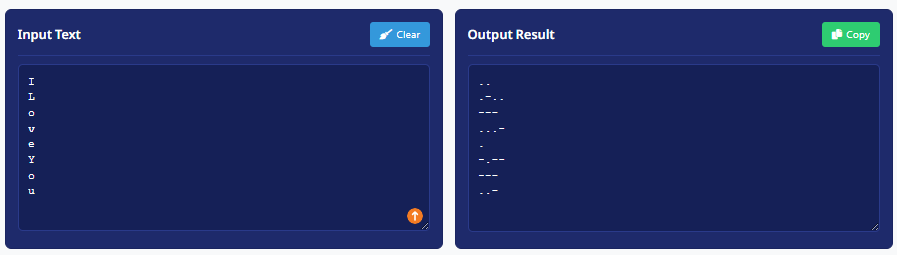
When combined, the full Morse code for “I Love You” appears as:
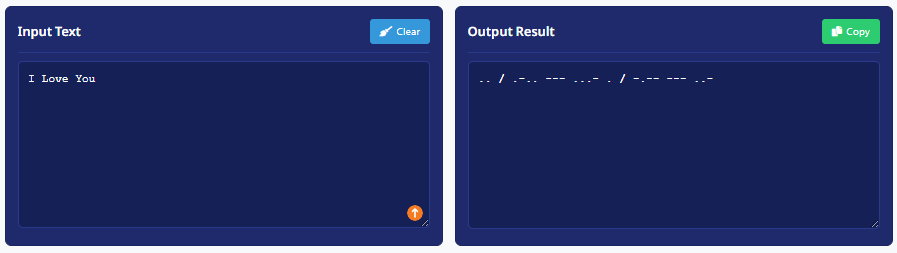
.. / .-.. — …- . / -.– — ..-
Each letter is separated by a small space for clarity, and words are divided by a slash ( / ) or extra space depending on the transmission method.
How to Send “I Love You” Using Sound
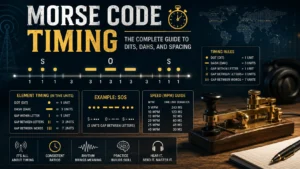
To transmit this phrase via sound, such as a radio tone, tapping, or beeps, each dot is a short sound and each dash is a longer sound. Brief pauses between letters and slightly longer pauses between words ensure the message can be understood. This method allows you to send “I Love You” audibly over short distances or radio communication channels.
How to Send “I Love You” Using Light Signals
“I Love You” can also be communicated visually using a flashlight, lamp, or reflective surface. Short flashes indicate dots, while long flashes represent dashes. Pauses between letters and words help the receiver decode the phrase correctly. This is ideal for romantic or playful Morse code exchanges where sound is not practical.
Written and Visual Representation
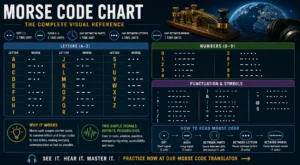
In written or printed form, “I Love You” is often displayed using the series of dots and dashes described above. It serves as a simple reference for learning Morse code, practicing rhythm, and understanding letter spacing. Visual guides and charts frequently use “I Love You” because it contains a mix of short and long signals, repeated letters, and multiple words.
Quick Reference: “I Love You” in Morse Code
Morse code: .. / .-.. — …- . / -.– — ..-
Represents a personal message of affection, not an emergency
Each letter follows international Morse code standards
Useful for learning, practice, or playful communication
Why “I Love You” Is Commonly Used in Learning Morse Code
This phrase is widely used in Morse code practice and tutorials because it combines a variety of letters and signals. Learners benefit from practicing the rhythm, timing, and spacing required to transmit multiple words. Additionally, the emotional and familiar nature of the phrase makes learning Morse code more engaging and memorable.
Difference Between “I Love You” and Emergency Signals
Unlike SOS, “I Love You” is not an emergency signal. While SOS is strictly for distress situations, “I Love You” is purely communicative and used for personal messages. Its Morse pattern is sent letter by letter, and it is important to maintain proper spacing for accurate transmission.
Can “I Love You” Be Translated Back From Morse Code?
Yes. When the Morse code for “I Love You” is entered into a translator or decoding tool, it can be converted back into plain text instantly. Correct spacing between letters and words is essential for accurate decoding, especially in multi-word phrases like this.