What Is “Goodbye” in Morse Code?
“Goodbye” in Morse code is the Morse representation of the word GOODBYE, used to signal the end of a conversation, transmission, or practice session. Each letter is encoded individually using dots and dashes according to the international Morse code system, making the message clear and universally understandable.
Morse Code Representation of Goodbye
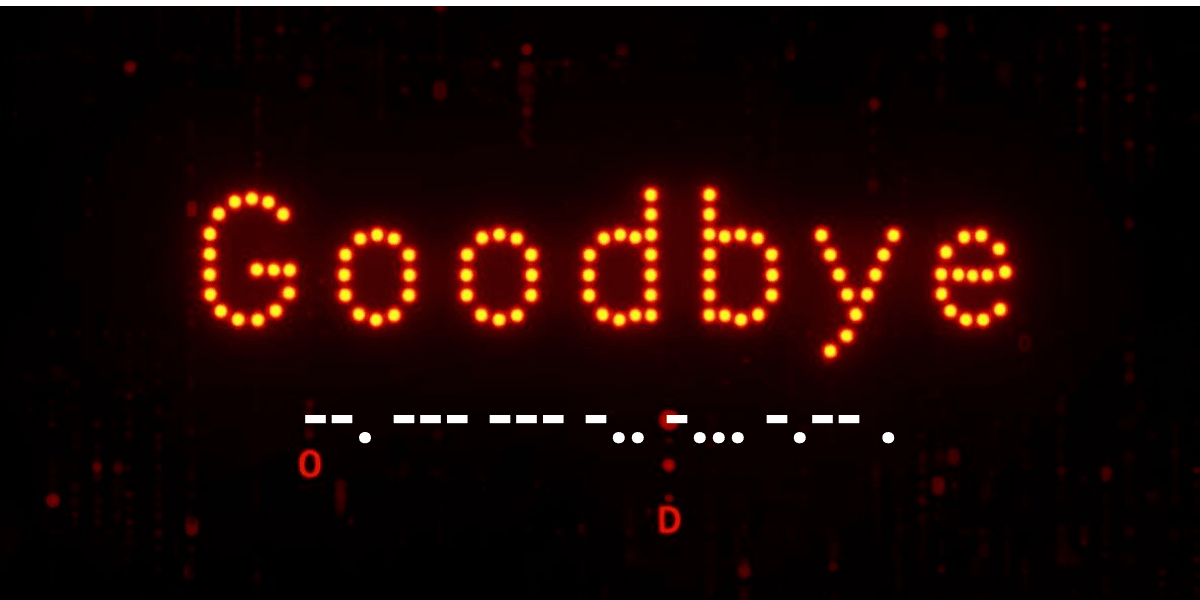
The word Goodbye is written in Morse code as:
G = –.
O = —
O = —
D = -..
B = -…
Y = -.–
E = ·
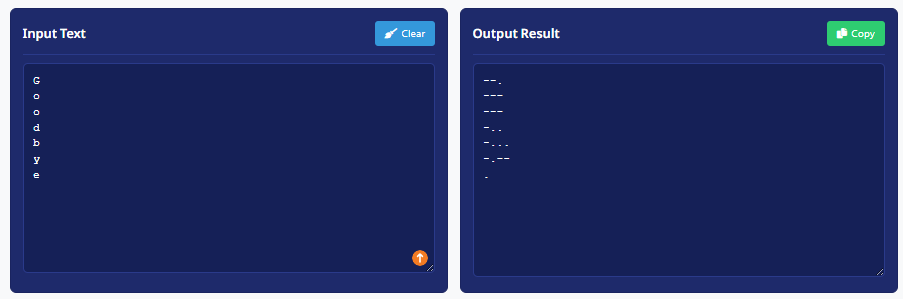
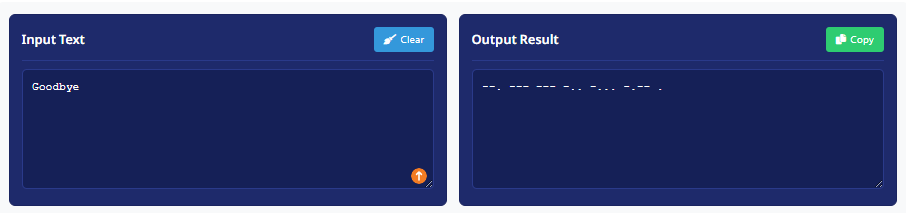
When written together, Goodbye in Morse code appears as:
–. — — -.. -… -.– .
Each letter is separated by a short pause to preserve accuracy and readability.
How Goodbye Is Used in Morse Communication
In Morse communication, “Goodbye” is commonly used to close a message or transmission. It indicates that communication is ending, whether in radio operations, training exercises, or educational demonstrations. Using a clear closing word helps avoid confusion and signals that no further messages will follow.
Is “Goodbye” a Special Morse Signal?
Goodbye is not a special or procedural Morse signal. It is a regular word encoded letter by letter. Unlike emergency or procedural signals, it carries no technical priority and is used purely for polite and clear communication.
Sending Goodbye Using Sound Signals
To send “Goodbye” using sound, each letter is transmitted in sequence using short tones for dots and longer tones for dashes. Proper spacing between letters is essential so the receiver can decode the message accurately, especially in live radio or audio-based communication.
Quick Reference: Goodbye in Morse Code
Goodbye in Morse code is written as:–. — — -.. -… -.– .
It is a standard closing word, not an emergency signal
Each letter follows international Morse code rules
It is widely used for practice, learning, and message endings
Sending Goodbye Using Light Signals
Goodbye can also be transmitted visually using light sources such as flashlights or signal lamps. Short flashes represent dots, while longer flashes represent dashes. This method is useful in visual demonstrations or situations where sound is not practical.
Goodbye in Written Morse Code
In written form, Goodbye is displayed using dots and dashes, making it easy to read and practice. Written Morse representations are commonly used in learning tools and translators to demonstrate correct letter formation and spacing.
Why Goodbye Is Useful for Morse Practice
Goodbye is a valuable practice word because it includes a variety of Morse characters and signal lengths. This helps learners improve timing, rhythm, and consistency while working with a familiar and meaningful word.
Goodbye vs Emergency Signals
Goodbye should never be confused with emergency signals like SOS. While both use Morse code, Goodbye is a routine communication term, whereas SOS is reserved strictly for distress situations requiring immediate assistance.
Can Goodbye Be Decoded Back Into Text?
Yes, when Morse code for Goodbye is entered into a Morse code translator, it can be decoded back into plain text instantly. Correct spacing between letters ensures accurate translation.