What Does “Come Here” Mean in Morse Code?
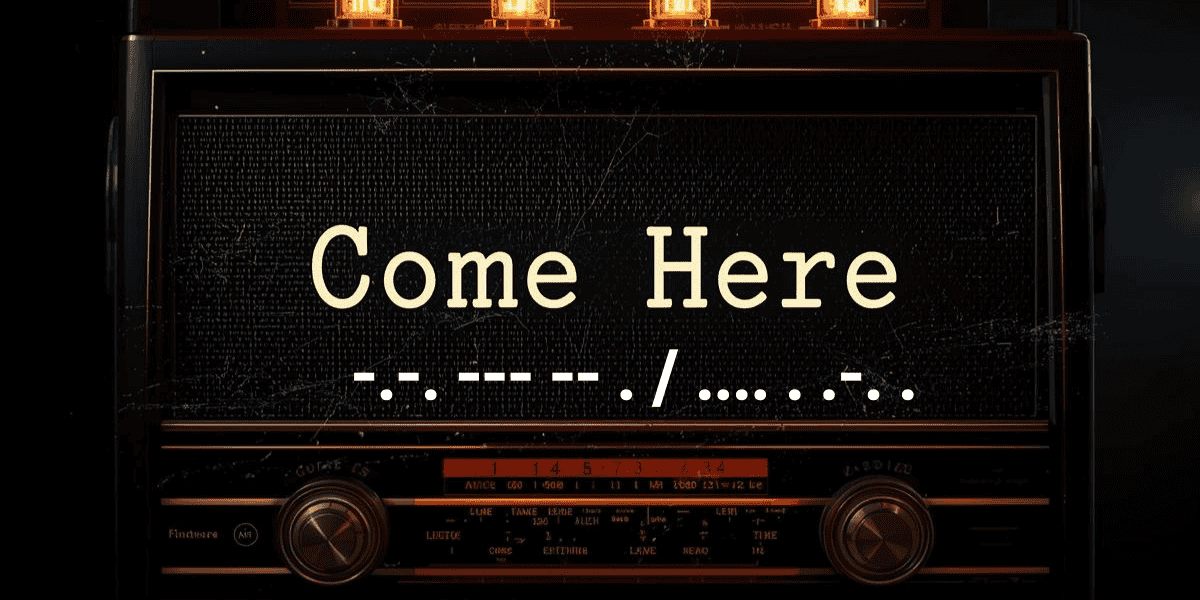
“Come here” in Morse code is the Morse representation of a directive phrase used to request someone to move closer or approach. In Morse communication, the phrase is encoded letter by letter using dots and dashes based on the international Morse code standard. It is commonly used in learning environments, practice sessions, and non-verbal signaling situations.
Morse Code Representation of “Come Here”
Each word in the phrase is encoded separately to maintain proper spacing and readability.
C = -.-.
O = —
M = —
E = ·
H = ….
E = ·
R = .-.
E = ·
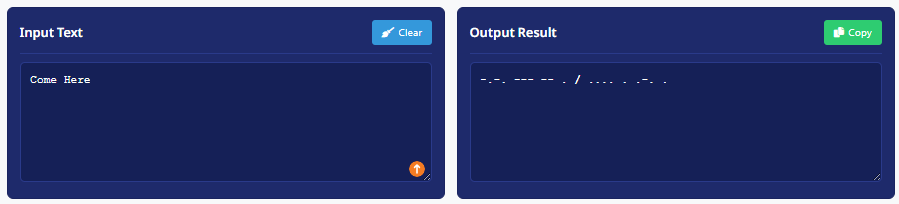
When written together, Come here in Morse code appears as:
-.-. — — . / …. . .-. .
The slash represents a space between words.
How “Come Here” Is Used in Morse Communication
“Come here” is typically used as a non-emergency instruction in controlled environments. It may be used during training exercises, silent communication, or demonstrations where verbal communication is not possible or not desired.
Is “Come Here” an Official Morse Signal?
“Come here” is not an official or predefined Morse signal. It is a regular phrase constructed using standard Morse characters. Its meaning depends on context and should only be used when there is no risk of confusion with emergency signals.
Quick Reference: Come Here in Morse Code
-.-. — — . / …. . .-. .
It is a directive phrase, not an emergency signal
It is commonly used for practice, training, and silent communication
How to Send “Come Here” Using Sound
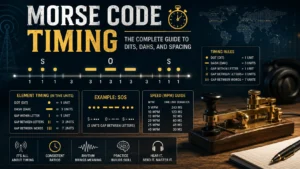
To transmit “come here” using sound, each dot is sent as a short tone and each dash as a longer tone. Letters are separated by short pauses, while a longer pause separates the two words. Accurate timing ensures the phrase is correctly understood by the receiver.
How to Send “Come Here” Using Light Signals
The phrase can also be sent visually using a flashlight, signal lamp, or blinking light source. Short flashes represent dots and long flashes represent dashes. Clear spacing between the words is important for readability, especially in low-visibility conditions.
“Come Here” in Written Morse Code
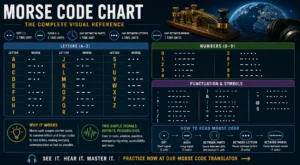
In written form, “come here” is displayed using dots, dashes, and a word separator. This format is commonly used in Morse charts, educational materials, and online Morse code translators to demonstrate phrase construction.
Why This Phrase Is Useful for Learning Morse Code
“Come here” helps learners practice combining multiple letters and words while maintaining correct spacing and rhythm. It introduces both short and long signal patterns, making it a useful phrase for intermediate Morse practice.
Difference Between Instructional Phrases and Distress Signals
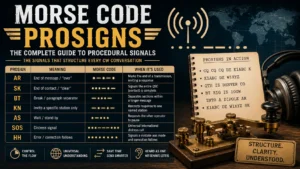
Instructional phrases like “come here” are used for communication and learning and should never replace or resemble distress signals such as SOS. Emergency Morse signals follow strict conventions and are reserved only for critical situations.
Can “Come Here” Be Decoded Back to Text?
Yes, when the Morse code for “come here” is entered into a Morse code translator with proper spacing, it can be decoded back into plain text accurately and instantly.