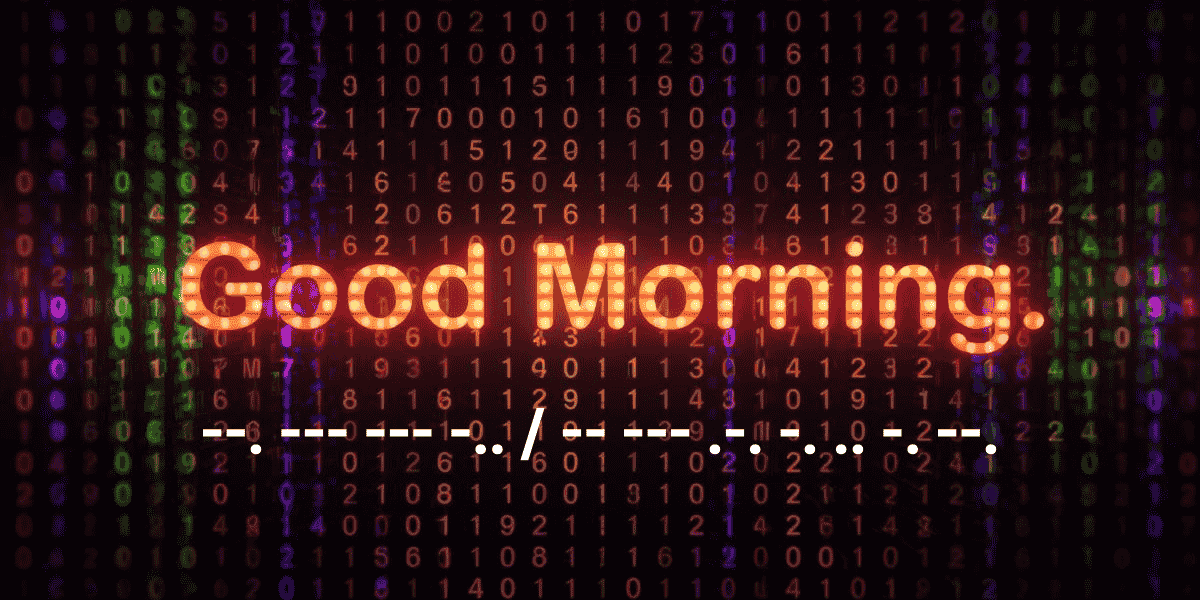
What Is “Good Morning” in Morse Code?
“Good Morning” in Morse code represents the standard greeting used to wish someone a pleasant start to their day. It is commonly transmitted in amateur radio communication, Morse code practice, and educational exercises. Each letter in the phrase is converted into dots and dashes according to the international Morse code standard.
Morse Code Representation of Good Morning
The phrase Good Morning is written in Morse code letter by letter as follows:
G = ––·
O = –––
O = –––
D = –··
M = ––
O = –––
R = ·–·
N = –·
I = ··
N = –·
G = ––·
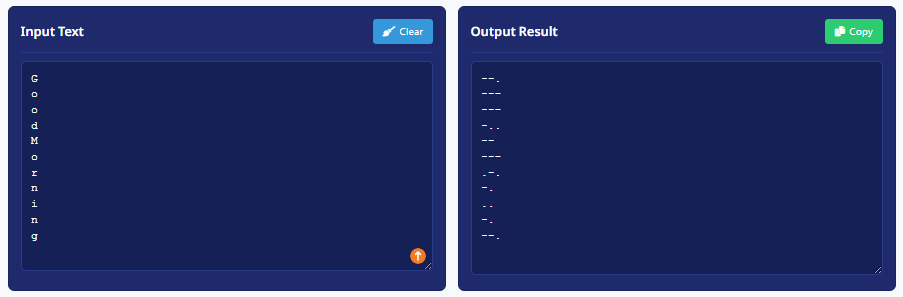
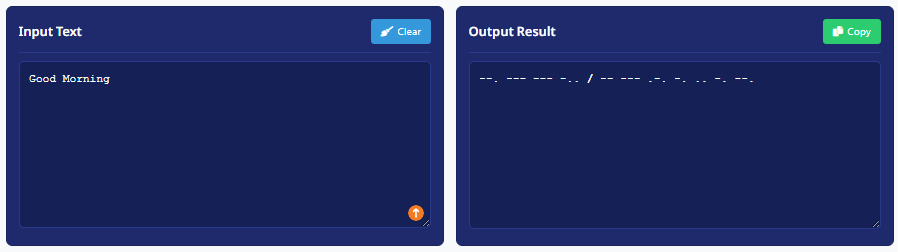
When combined, “Good Morning” in Morse code appears as:
–. — — -.. / — — .-. -. .. -. –.
A single space separates each letter, while a slightly longer pause separates the words, ensuring the message is clearly understood.
How to Use “Good Morning” in Morse Communication
“Good Morning” is often used to start a conversation or establish contact on radio channels or Morse practice exercises. Unlike emergency signals, this greeting serves as a friendly opening, helping operators test connections, practice timing, and improve their encoding and decoding skills.
How to Send “Good Morning” Using Sound
To send “Good Morning” audibly, each dot is transmitted as a short beep and each dash as a longer beep. A small pause is maintained between letters, and a slightly longer pause separates the two words. This ensures the receiver can accurately interpret the phrase, making it perfect for Morse practice or casual radio communication.
How to Send “Good Morning” Using Light Signals
“Good Morning” can also be sent visually using flashlights, signal lamps, or reflective surfaces. Short flashes represent dots, and long flashes represent dashes. The spacing between letters and words must be observed to ensure the phrase is understandable, even from a distance.
Quick Reference: Good Morning in Morse Code
Morse code for “Good Morning”: –. — — -.. / — — .-. -. .. -. –.Used as a friendly greeting, not an emergency signal
Follows international Morse code rules for letters and spacing
Perfect for learning, practice, and casual Morse communication
Written and Visual Morse Code for “Good Morning”
In written or visual form, the Morse code pattern for “Good Morning” provides an easy reference for beginners and advanced learners alike. Practicing with familiar phrases like “Good Morning” helps users grasp letter combinations, rhythm, and timing before moving on to more complex messages.
Why “Good Morning” Is Useful for Learning Morse Code
This phrase includes a variety of Morse code letters, from simple to complex combinations. It teaches learners proper spacing, pacing, and repetition, making it ideal for practicing Morse code transmission and interpretation in a practical, friendly context.
Difference Between Greetings and Emergency Signals
“Good Morning” is strictly a friendly greeting and should not be used as an emergency signal. Unlike SOS, which is designed to signal distress, “Good Morning” serves a communication and practice purpose, helping operators establish contact and build Morse proficiency.