What Does “How Are You” Mean in Morse Code?
“How are you” in Morse code is the Morse representation of a common conversational question used to ask about someone’s well-being. In Morse communication, this phrase is encoded letter by letter using dots and dashes based on the international Morse code standard. It is widely used in learning, practice sessions, and friendly radio communication.
Morse Code Representation of “How Are You”
Each word in the phrase is translated separately to maintain proper spacing and clarity.
H = ….
O = —
W = .–
A = .-
R = .-.
E = ·
Y = -.–
O = —
U = ..-
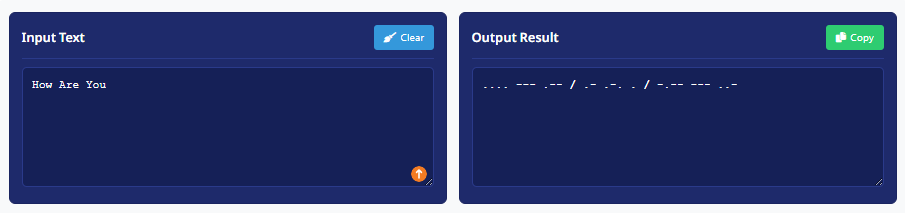
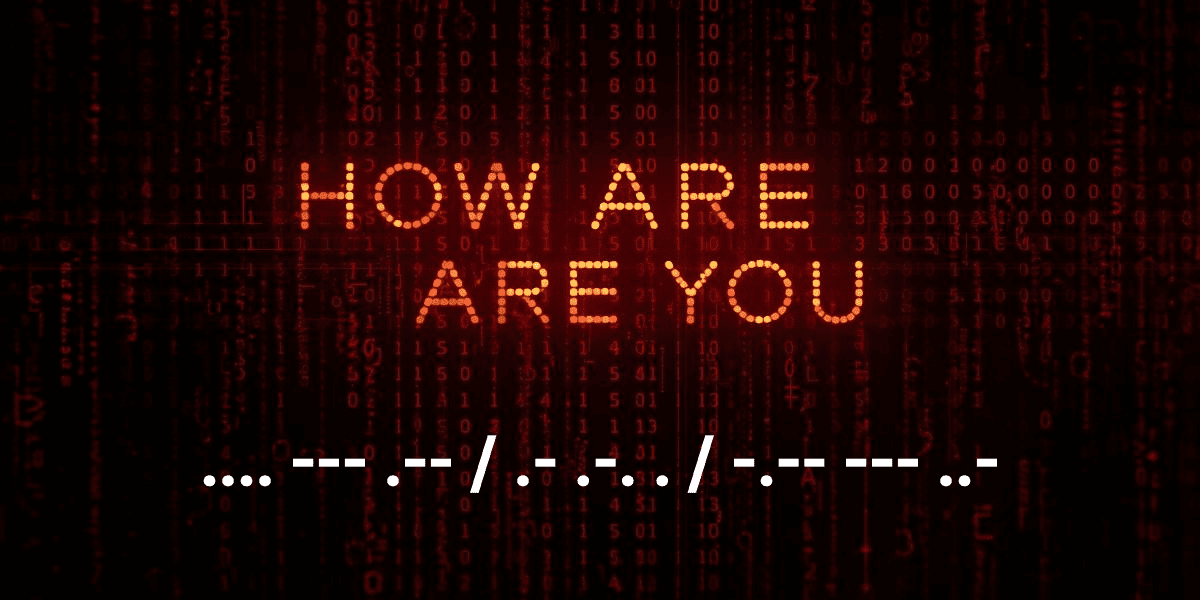
When written together, How are you in Morse code appears as:
…. — .– / .- .-. . / -.– — ..-
The slash indicates a space between words.
How “How Are You” Is Used in Morse Communication
This phrase is commonly used as a friendly follow-up greeting after initial contact has been made. In amateur radio, Morse training, and casual signaling, it helps simulate real conversations and improves fluency in sending and receiving longer phrases.
Is “How Are You” a Standard Morse Signal?
“How are you” is not a predefined or special Morse signal. It is a normal phrase encoded using standard Morse characters. Its value lies in conversational practice rather than official or emergency communication.
Quick Reference: How Are You in Morse Code
“How are you” in Morse code is written as…. — .– / .- .-. . / -.– — ..-
It is a conversational phrase, not an emergency signal
It is commonly used for practice, learning, and friendly communication
How to Send “How Are You” Using Sound
To send this phrase using sound, each dot is transmitted as a short tone and each dash as a longer tone. A brief pause separates letters, while a slightly longer pause separates words. Proper timing is essential to ensure the phrase is easily understood by the receiver.
How to Send “How Are You” Using Light Signals
“How are you” can also be transmitted visually using a flashlight or signal lamp. Short flashes represent dots and long flashes represent dashes. Clear spacing between words helps avoid confusion, especially in longer phrases like this one.
“How Are You” in Written Morse Code
In written Morse form, the phrase is displayed using dots, dashes, and word separators. This representation is widely used in educational tools, Morse charts, and online translators to help learners understand sentence structure in Morse code.
Why This Phrase Is Useful for Learning Morse Code
“How are you” is useful for learners because it includes a variety of letter patterns and multiple words. Practicing this phrase helps improve rhythm recognition, letter spacing, and confidence in handling longer Morse code messages.
Difference Between Conversational Phrases and Emergency Signals
Conversational phrases like “How are you” should never be confused with emergency signals such as SOS. While both use Morse code, emergency signals are reserved strictly for distress situations, whereas conversational phrases are meant for practice and communication.
Can “How Are You” Be Decoded Back to Text?
Yes, when entered into a Morse code translator with proper spacing between letters and words, the Morse code for “How are you” can be decoded back into plain text accurately and instantly.