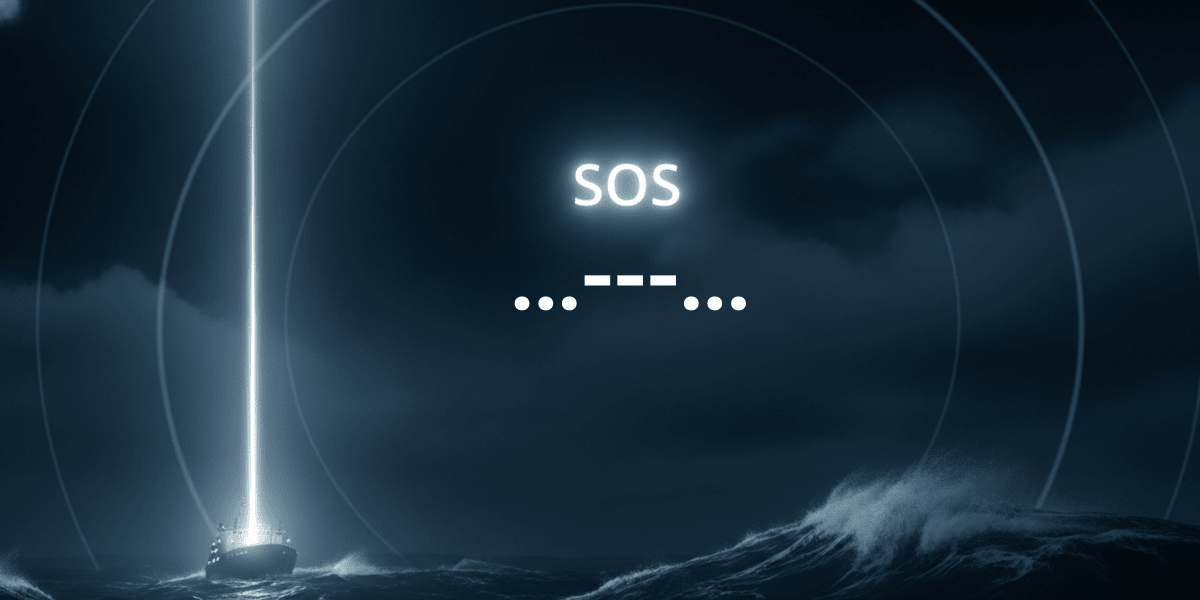
Morse Code Phrases – Common Signals, Messages & Meanings
Morse code phrases are short, meaningful messages translated into dots and dashes to communicate quickly and clearly across distance, noise, or limited technology. From emergency distress signals like SOS to friendly greetings, polite expressions, and radio sign-offs, these phrases have been used for over a century in maritime, aviation, military, amateur radio, and everyday learning.
This page brings together the most common Morse code phrases, organized by use case, with clear explanations and practical examples. Whether you are learning Morse code, decoding a signal, or sending a message using dots and dashes, this guide gives you everything you need in one place.
What Are Morse Code Phrases?
Morse code phrases are predefined words or expressions that are commonly communicated using the International Morse Code system. Instead of translating individual letters each time, these phrases are memorized and recognized as complete signals, making communication faster and more reliable.
They are especially useful when:
- Speed matters
- Communication conditions are poor
- Signals must be universally understood
- Only sound, light, or tapping is available
Morse code phrases fall into several main categories, including emergency signals, greetings, courtesy expressions, and standardized radio communication phrases.
Emergency & Distress Morse Code Phrases
Emergency phrases are the most critical part of Morse code communication. These signals are globally recognized and designed to be unmistakable, even under stress or interference.
SOS (Distress Signal)
SOS is the most famous Morse code phrase and the universal distress signal. It does not stand for words—it was chosen because its pattern is simple and highly recognizable.
- Morse code: … — …
- Used when immediate help is required
- Recognized worldwide across land, sea, and air
SOS can be sent using sound, light, tapping, or visual signals, making it one of the most reliable emergency messages ever created.
MAYDAY
Mayday is an international voice distress call, but it can also be transmitted in Morse code when voice communication fails.
- Indicates grave and imminent danger
- Common in maritime and aviation emergencies
- Used when lives are at risk
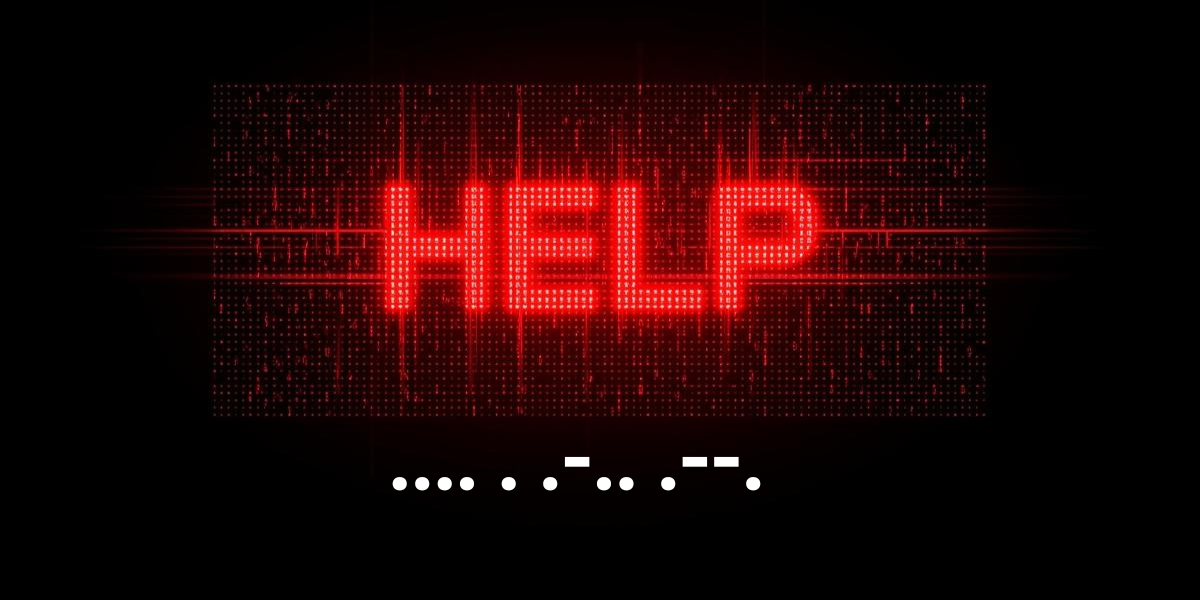
HELP
The word HELP is often sent in Morse code in survival situations when SOS cannot be repeated continuously or when additional clarity is needed.
- Easy to understand
- Often paired with SOS
- Useful in search-and-rescue scenarios
EMERGENCY
Though longer, the word EMERGENCY is sometimes transmitted in controlled environments or training scenarios to signal danger without ambiguity.
👉 Explore full emergency signals in our dedicated Emergency Morse Code Phrases section.
Greeting Phrases in Morse Code
Greeting phrases make Morse code communication more human and conversational. These phrases are commonly used by learners, hobbyists, and amateur radio operators.
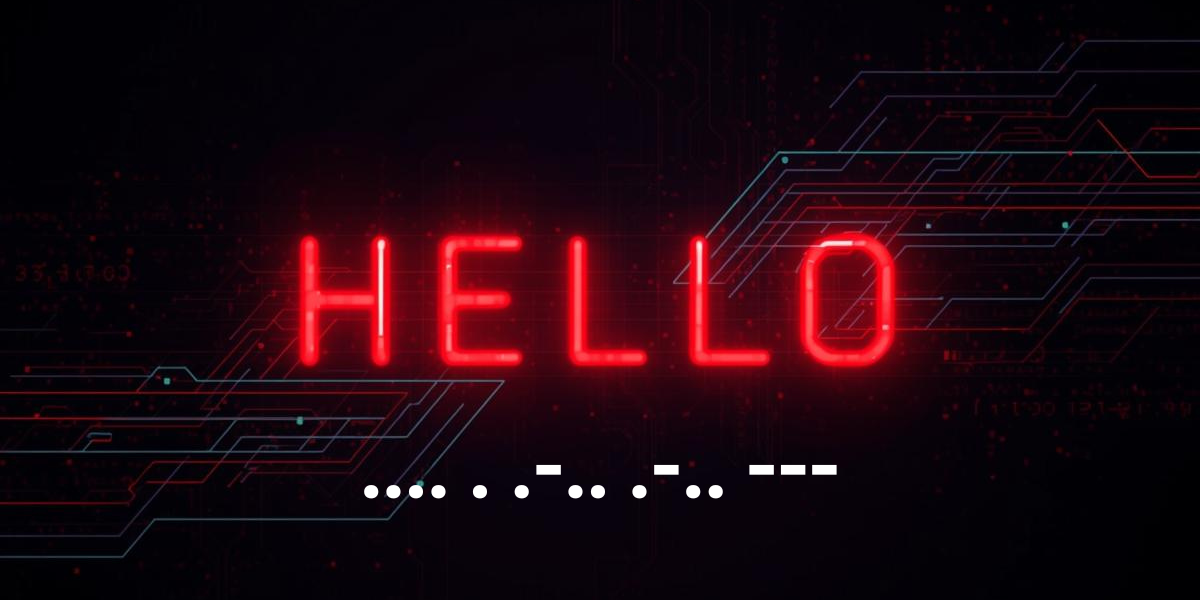
HELLO
HELLO is one of the most frequently translated Morse code phrases.
- Used to start communication
- Common in learning practice
- Ideal for testing signals
HI
Short and simple, HI is popular in quick exchanges, especially in radio communication and casual signaling.
GOOD MORNING / GOOD EVENING
These phrases are used when timing or politeness matters, especially in formal or long-distance Morse exchanges.
👉 See more greeting phrases in the Greetings in Morse Code collection.
Farewells & Sign-Off Phrases
Ending a Morse code message clearly is just as important as starting one. Farewell phrases signal completion and prevent confusion.
GOODBYE
GOODBYE is the most direct closing phrase and is widely used in learning and demonstrations.
BYE
A shorter alternative, BYE is casual and efficient, often used in practice sessions or friendly exchanges.
73 – Best Regards
73 is a standardized Morse code number meaning “best regards.”
- Widely used by amateur radio operators
- Acts as a polite sign-off
- Often paired with call signs
This phrase comes from early telegraph shorthand and remains popular today.
SK – End of Transmission
SK signals the end of a contact and that no further messages will be sent.
- Used mainly in radio communication
- Prevents unnecessary waiting
- Indicates final closure
👉 Discover all radio sign-offs in the Farewell Morse Code Phrases section.
Courtesy & Polite Morse Code Phrases
Politeness plays an important role in Morse code communication, especially in formal or professional exchanges.
THANK YOU
THANK YOU is commonly sent to acknowledge help, confirmation, or successful communication.
PLEASE
PLEASE is used when requesting assistance or information politely.
SORRY
SORRY is sent to apologize for errors, interruptions, or delays during communication.
YES / NO
Short confirmation phrases like YES and NO help keep Morse exchanges efficient and clear.
👉 View all courtesy expressions in the Polite Morse Code Phrases section.
Popular & Everyday Morse Code Phrases
Some phrases appear frequently across learning materials, online tools, and demonstrations because they are practical and familiar.
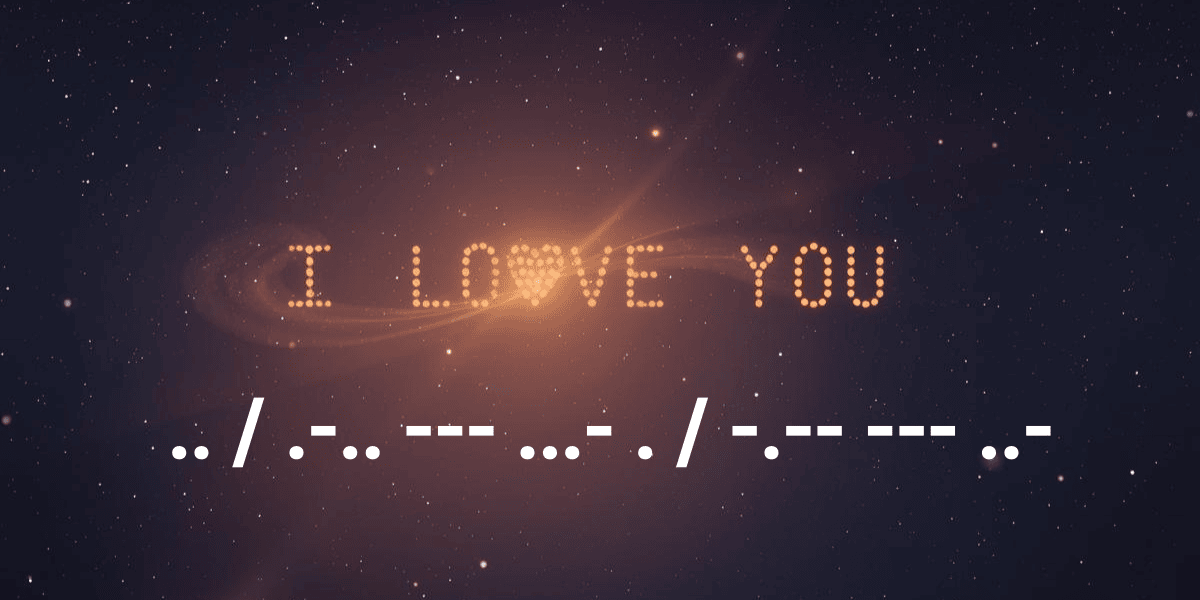
I LOVE YOU
One of the most popular personal phrases translated into Morse code, often used for creative or romantic purposes.
COME HERE
Used in signaling and demonstrations, COME HERE is simple and directive.
HOW ARE YOU
A conversational phrase used in extended Morse code practice sessions.
OK
OK is one of the most universally understood confirmations and is frequently used in Morse exchanges.
👉 Browse more everyday expressions in the Popular Morse Code Phrases section.
Amateur Radio (Ham Radio) Morse Code Phrases
Morse code remains alive in amateur radio, where operators use standardized phrases and abbreviations for efficiency.
CQ – Calling Any Station
CQ is sent to invite responses from any listening station.
QSO – Contact
QSO refers to a communication or contact between stations.
QTH – Location
QTH is used to ask or share a station’s location.
R – Received
R confirms that a message has been received and understood.
BK – Break
BK signals a pause or invites the other station to transmit.
👉 Explore radio-specific phrases in the Ham Radio Morse Code section.
Why Morse Code Phrases Are Still Important
Despite modern technology, Morse code phrases remain valuable because they are:
- Extremely reliable
- Recognizable across languages
- Effective with minimal equipment
- Useful in emergencies and survival
- Ideal for learning signal communication
They are still taught in aviation, maritime safety, scouting, emergency preparedness, and amateur radio communities worldwide.
How to Translate Morse Code Phrases
You can translate any phrase into dots and dashes using a Morse code translator. These tools allow you to:
- Convert text to Morse code instantly
- Decode Morse signals back into readable text
- Practice sending and receiving phrases accurately
For learning, it’s best to start with common phrases before moving to longer sentences.
Learning Tips for Morse Code Phrases
- Start with short, common phrases like SOS, HI, and OK
- Practice listening, not just reading
- Use light or sound to reinforce recognition
- Focus on rhythm rather than counting dots and dashes
- Repeat phrases daily for muscle memory
Frequently Asked Questions About Morse Code Phrases
Are Morse code phrases universal?
Yes. International Morse Code phrases are recognized worldwide and used consistently across countries.
Is SOS still used today?
Absolutely. SOS remains the universal distress signal and is still taught and recognized globally.
Can Morse code phrases be sent without sound?
Yes. Morse code can be transmitted using light, tapping, vibration, or visual signals.
Are Morse code phrases still used in aviation and maritime fields?
Yes. Morse code remains part of emergency protocols and training in these industries.
Is Morse code hard to learn?
No. Starting with common phrases makes learning Morse code much easier and faster.
Explore More Morse Code Resources
This category page is your starting point. You can dive deeper into each section through dedicated subpages covering emergency signals, greetings, polite expressions, radio phrases, and more.
Morse code phrases are more than dots and dashes — they are a timeless communication system that continues to save lives, connect people, and inspire learners around the world.