What Is “Yes” in Morse Code?
“Yes” in Morse code is the Morse representation of the affirmative word YES, commonly used to confirm agreement, acknowledgment, or understanding in Morse-based communication. Each letter of the word is encoded individually using the international Morse code system, making it easy to transmit and recognize.
Morse Code Representation of Yes
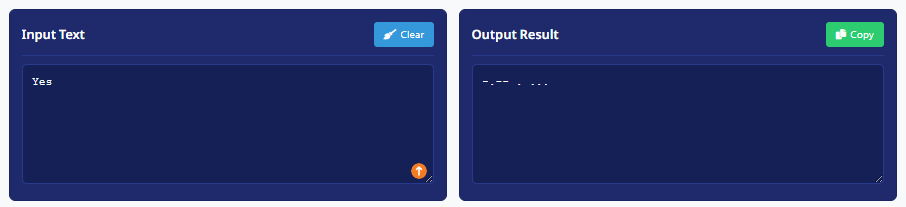
The word Yes is written in Morse code as:
Y = -.–
E = ·
S = …
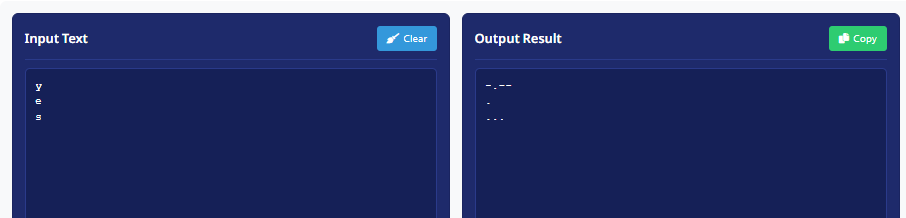
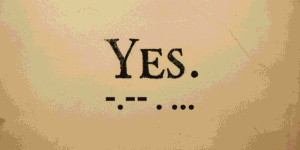
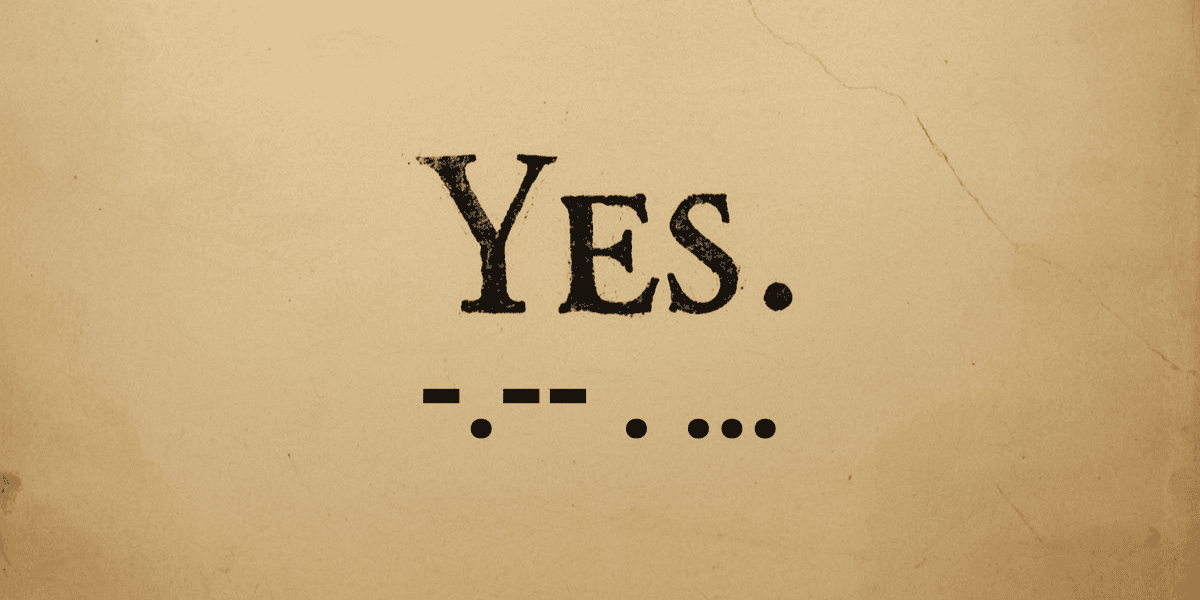
When combined, Yes in Morse code appears as:
-.– . …
Each letter is separated by a short pause to ensure clarity during transmission or decoding.
How Yes Is Used in Morse Communication
In Morse communication, “Yes” is commonly used as a response to confirm receipt of a message, approve an instruction, or acknowledge understanding. It is frequently heard in amateur radio exchanges, training exercises, and instructional demonstrations.
Is “Yes” a Special Morse Signal?
“Yes” is not a special or emergency signal. It is a standard word encoded letter by letter using Morse code rules. Unlike SOS or other prosigns, Yes has no standalone operational meaning beyond its normal linguistic use.
How to Send Yes Using Sound Signals
To send Yes using sound, such as radio tones, beeps, or tapping, the sender transmits each letter in sequence. Short sounds represent dots, while longer sounds represent dashes. Correct spacing between letters ensures that the message is clearly understood by the receiver.
Quick Reference: Yes in Morse Code
Yes in Morse code is written as -.– . …It represents affirmation or confirmation
It follows standard international Morse code rules
It is used in learning, training, and everyday Morse communication
How to Send Yes Using Light Signals
Yes can also be transmitted visually using light signals. Short flashes represent dots and longer flashes represent dashes. This method is often used in Morse code training, signaling practice, or visual demonstrations.
Yes in Written and Visual Morse Code
In written form, Yes is displayed using dots and dashes, making it easy to learn and decode. It is commonly used in educational materials and Morse code translators to demonstrate how affirmative responses are encoded.
Why Yes Is Important in Morse Practice
Yes is a practical learning word because it represents real conversational usage in Morse code. It helps learners practice letter spacing, rhythm, and decoding short responses that are commonly used in real communication scenarios.
Difference Between Yes and Morse Prosigns
Yes is a regular word, while Morse prosigns are procedural signals used to control communication flow. Prosigns convey instructions or actions, whereas Yes simply communicates affirmation.
Can Yes Be Decoded Back Into Text?
Yes can be decoded back into plain text using any Morse code translator, provided the spacing between letters is correctly maintained. Accurate spacing ensures reliable decoding and prevents misinterpretation.