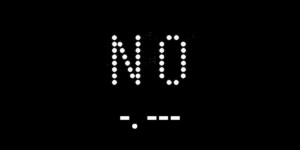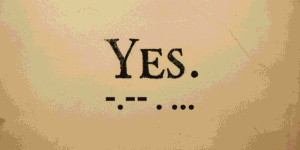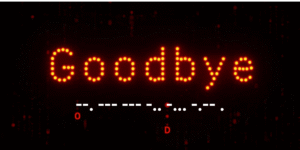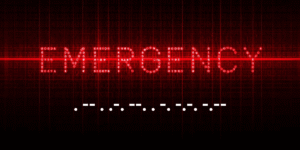
Morse code is a method of encoding text as a sequence of two signals — a short signal called a dot (·) and a long signal called a dash (—). Every letter, number, and punctuation mark in the alphabet maps to a unique dot-dash combination, allowing written language to travel across sound, light, electricity, or touch.
Developed in the 1830s by Samuel Morse and Alfred Vail for the electric telegraph, Morse code became humanity’s first system for near-instant long-distance communication. Nearly two centuries later it is still in active use across amateur radio, aviation navigation, accessibility technology, and emergency signalling worldwide.
This guide explains what Morse code is, how it works, what it sounds like, where it is still used today, and how to use InMorseCode.com’s free Morse code translator, Morse code generator, converter, and decoder to encode and decode messages in seconds.
How Does Morse Code Work?
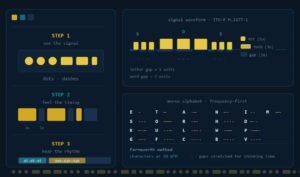
Morse code works by assigning every character in the Latin alphabet — and many others — a unique pattern of short and long signals. These signals are called dots (dits) and dashes (dahs). Timing, not just sequence, defines the code.
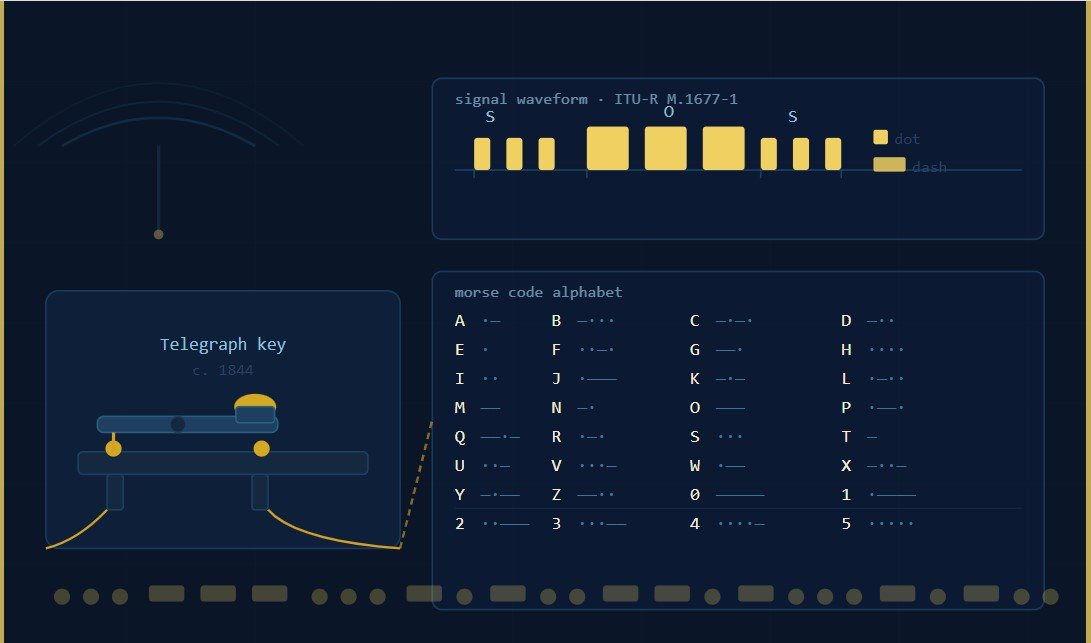
The ITU Timing Standard
The International Telecommunication Union defines the timing ratios used worldwide under ITU-R Recommendation M.1677-1, which is the standard implemented by InMorseCode.com:
| Element | Duration | Notes |
| Dot (dit) | 1 time unit | Shortest signal |
| Dash (dah) | 3 time units | Three times a dot |
| Gap between signals (same letter) | 1 time unit | Within a single character |
| Gap between letters | 3 time units | Start of a new character |
| Gap between words | 7 time units | Equivalent to a word space |
| 💡 Why Timing MattersMorse code is not just about the dot-dash pattern — the spaces between signals are equally important. A wrong pause turns one letter into two. Every audio file generated by the InMorseCode.com Morse code generator follows these exact ITU timing ratios, making it fully compatible with real-world radio practice. |
The Morse Code Alphabet: Letters and Numbers
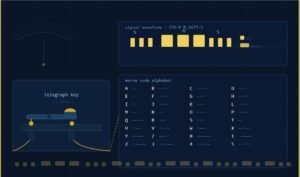
One of Morse code’s most elegant features is frequency-weighted encoding: the most common letters in English get the shortest codes. E (the most common letter) is a single dot ·, and T (second most common) is a single dash —. Rare letters like J or Q get longer sequences. This keeps average transmission time fast.
Below is a selection of the most important characters. The full chart — including punctuation, prosigns, and special characters — is available on the InMorseCode reference table.
| Letter | Code | Letter | Code | Letter | Code | Notes |
| E | · | T | — | A | ·— | Shortest codes |
| I | ·· | N | —· | S | ··· | Common letters |
| O | ——— | H | ···· | R | ·—· | 3-4 element codes |
| SOS | ···———··· | Distress signal |
👉 Try the full Morse code translator and generator at InMorseCode.com →
A Brief History of Morse Code
Morse code was created between 1836 and 1844 by American inventor Samuel F. B. Morse and his collaborator Alfred Vail. Their goal was to transmit written language over an electrical wire. The first official message — “What hath God wrought” — was sent from Washington D.C. to Baltimore on 24 May 1844.
The original American Morse code differed from what we use today. In 1865, the International Telegraph Conference in Paris standardised a unified version — the International Morse Code — with a single dash length and consistent timing. This is the standard used by InMorseCode.com.
Morse code’s most defining moment came in April 1912, when the RMS Titanic sent SOS · · · — — — · · · into the North Atlantic. The signal was received by the RMS Carpathia, saving 705 lives. SOS was chosen not as an abbreviation but because its dot-dash pattern is unmistakable — impossible to confuse with any other sequence.
Today, the ITU maintains the standard under Recommendation M.1677-1, which defines all 26 Latin letters, 10 numerals, 18 punctuation marks, and the timing ratios every compliant tool must follow.
Is Morse Code Still Used? Yes — Here’s Where
Despite being nearly 200 years old, Morse code is not obsolete. Its unique resilience — requiring only two distinguishable signals — means it survives wherever more complex systems fail.
1. Amateur Radio (Ham Radio CW)
The world’s largest active community of Morse code users is amateur radio. Operators use CW (Continuous Wave) Morse transmission daily on shortwave bands for long-distance contacts, emergency communication, and radio contesting. The Advanced Morse Code Machine at InMorseCode includes Farnsworth spacing controls designed specifically for CW practice.
2. Aviation Navigation Beacons
Every VOR and NDB navigational aid in aviation transmits its two- or three-letter identifier in Morse code continuously. When a pilot tunes their navigation radio, they verify the correct beacon by decoding its Morse ID — a standard procedure printed on all aviation charts worldwide.
3. Accessibility and Assistive Technology
In 2018, Google added Morse code input to Android’s Gboard keyboard specifically for users with motor disabilities. A person who can control only a single switch — through head movement, an eye blink, or a sip-and-puff device — can type full messages using just two inputs: dot and dash. InMorseCode.com follows the same ITU encoding standard, making its Morse code converter compatible with assistive technology workflows.
4. Emergency and Survival Signalling
SOS — · · · — — — · · · — can be transmitted with a flashlight, mirror, whistle, or any device that produces two distinct signals. Military survival training still teaches Morse code because it functions when all voice and digital systems fail. Use the Morse Code Light Translator to practice visual signalling.
5. Education, Gaming & Pop Culture
Morse code is a Boy Scouts merit badge topic, a STEM teaching tool for signal encoding theory, and appears in films, television shows, video games, and escape room puzzles worldwide. Whether you’re decoding a message in Interstellar, Stranger Things, or a real-world ARG puzzle, the InMorseCode Morse code decoder verifies any sequence in seconds.
How to Use a Morse Code Translator, Generator & Decoder
InMorseCode.com provides a free, browser-based suite of tools for encoding, decoding, and learning Morse code — no account or download required. Here is how to use each core function:
Text to Morse Code (Morse Code Generator / Converter)
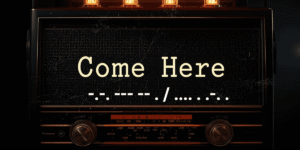
To convert text to Morse code, type or paste any message into the input box on the Morse Machine. The Morse code generator produces the dot-dash output instantly, plays it as a CW radio tone, and lets you adjust speed (5–60 WPM), pitch (300–800 Hz), and volume. Use Save Audio to download the file for offline practice, or Share to generate a link.
Morse Code to Text (Morse Code Decoder)
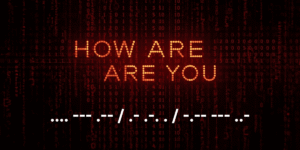
To decode Morse code back to text, enter dots and dashes using the standard input format: . for dot, – for dash, single space between letters, / between words. For example: … — … decodes to SOS. The Audio to Morse decoder accepts real audio files and microphone input for decoding broadcast or recorded Morse.
Advanced Features: Multi-Language Morse Code
Unlike most Morse tools, InMorseCode.com also provides dedicated translators for Russian Cyrillic Morse code (33-letter 1856 standard) and Japanese Wabun Morse code (46 Katakana syllables, ITU 1942). Both operate with the same real-time audio output and adjustable WPM controls as the main translator.
| ⚡ Quick Start Go to InMorseCode.com → type SOS → press Play at 15 WPM. You will hear: · · · — — — · · · (three short, three long, three short). Once that pattern is in your ear, you know the most important Morse code sequence in existence. |
Frequently Asked Questions About Morse Code
These questions and answers are optimised for Google’s featured snippets, AI Overviews, and voice search results.
| Question | Answer |
| What is Morse code? | Morse code is a telecommunications system that encodes letters, numbers, and punctuation as sequences of short signals (dots) and long signals (dashes). It was developed by Samuel Morse and Alfred Vail in the 1830s and standardised by the ITU as International Morse Code (ITU-R M.1677-1). |
| How does a Morse code translator work? | A Morse code translator converts plain text into dot-dash sequences using a lookup table of ITU-standard character codes. It then generates audio tones at specified WPM and Hz frequencies. InMorseCode.com’s translator processes everything in-browser with no server-side data transmission. |
| What is a Morse code generator? | A Morse code generator converts text input into audible CW tones following the ITU timing standard. You type a message, and the generator produces the corresponding Morse audio at your chosen speed and pitch. InMorseCode.com offers a free online Morse code generator with adjustable 5–60 WPM speed. |
| What does SOS mean in Morse code? | SOS in Morse code is · · · — — — · · · (three dots, three dashes, three dots). It is the internationally recognised maritime distress signal. SOS has no literal meaning as an abbreviation — it was chosen because the pattern is unmistakable and impossible to confuse with other signals. |
| Is Morse code still used today? | Yes. Morse code is actively used in amateur radio (CW operating), aviation navigation beacons (VOR and NDB identifiers), accessibility technology (Google Gboard), military survival training, and emergency signalling. The ITU maintains the standard to this day. |
| How long does it take to learn Morse code? | Most beginners can learn SOS and basic emergency letters within one hour. Reaching conversational speed (around 15 WPM) typically takes 3–6 months of daily practice using the Farnsworth method. Start with InMorseCode.com’s free Morse Machine at 5 WPM and gradually increase speed. |
| What is the difference between a Morse code translator and a Morse code decoder? | A Morse code translator converts text to dots and dashes (or dots and dashes to text) from typed input. A Morse code decoder converts audio signals — from a file, microphone, or radio — into text automatically by analysing the sound’s timing. InMorseCode.com offers both. |
| What is the Morse code alphabet? | The Morse code alphabet assigns each of 26 Latin letters, 10 digits, and 18 punctuation marks a unique dot-dash pattern. E = · (one dot), T = — (one dash), SOS = ···———···. The full international alphabet is defined by ITU-R M.1677-1 and available at InMorseCode.com/learn. |
Start Translating Morse Code Now
Morse code is one of history’s most elegant communication systems — two signals that encode the entire written language. Whether you need to translate text to Morse code, decode a Morse code message, generate audio for CW practice, or explore multi-language Morse systems, InMorseCode.com has the tools to do it instantly and for free.
Implemented to the ITU-R M.1677-1 international standard and maintained by signal processing expert Janney, InMorseCode.com is used daily by amateur radio operators, students, educators, emergency preparedness practitioners, and puzzle designers worldwide.
Try InMorseCode.com’s Free Tools Now
Morse Code Translator · Morse Machine · Audio Decoder · Japanese Wabun · Russian Morse
→ inmorsecode.com