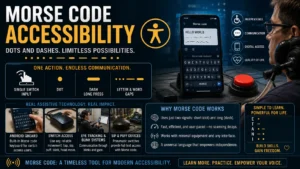
Learn how to say “What’s Up” in Morse Code with our interactive translator, audio playback, and breakdown guide. Whether you’re a beginner, student, or Morse code enthusiast, this page helps you understand and practice real-world Morse communication in a simple and modern way.
👉 Try live tools here:
What is “Whats Up” in Morse Code?
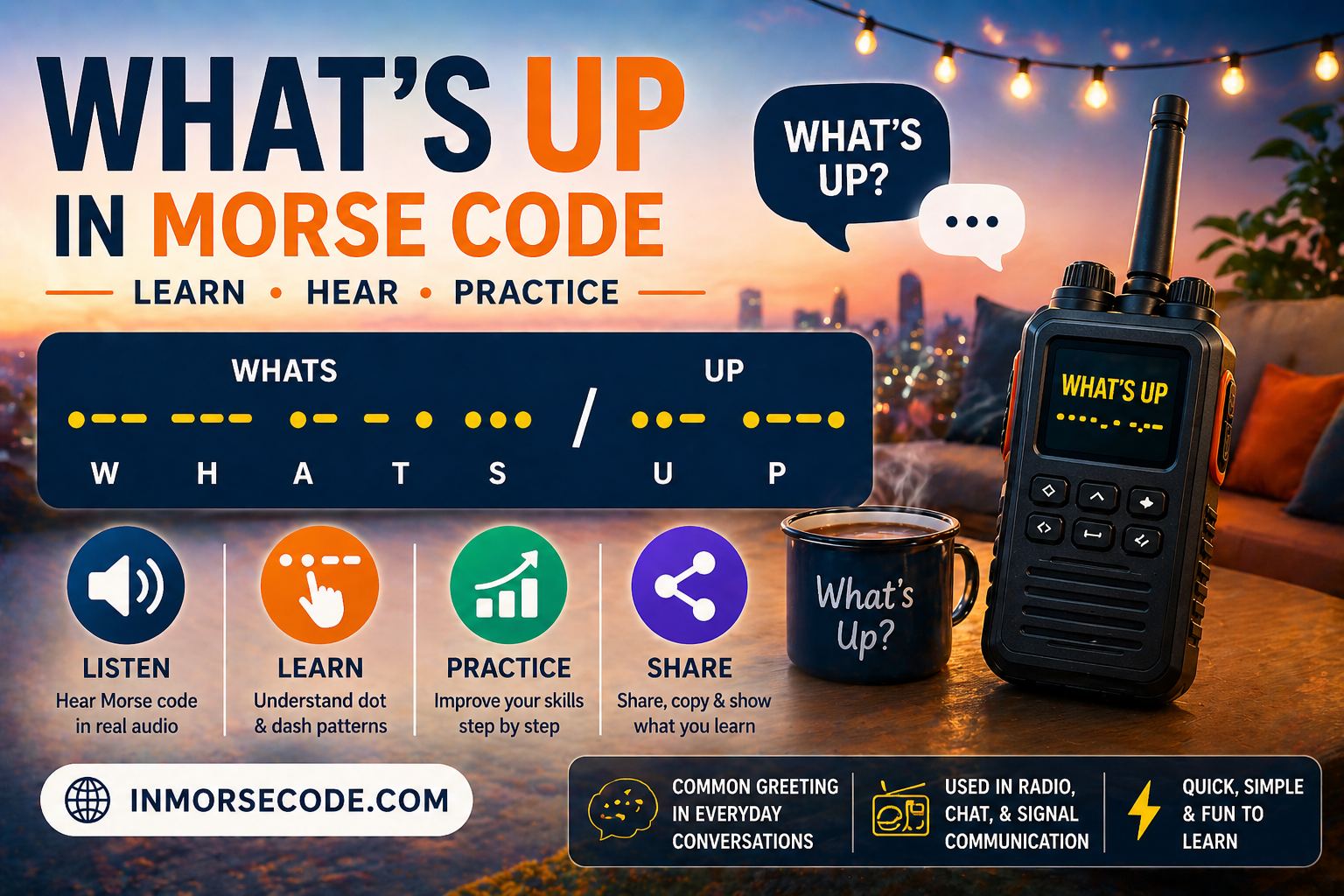
The phrase “What’s Up” in Morse code is:
·−− ···· ·− − ··· / ··− ·−−·
This represents two words:
- WHATS
- UP
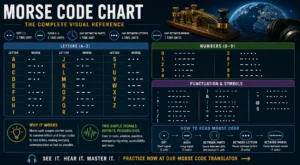
Each letter is converted into a sequence of dots (·) and dashes (−) based on the international Morse code system.
Morse Code Breakdown (Letter by Letter)
WHATS
- W → ·−−
- H → ····
- A → ·−
- T → −
- S → ···
UP
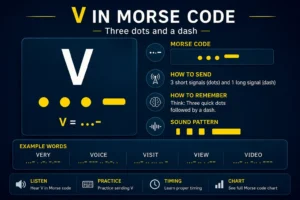
- U → ··−
- P → ·−−·
Why Learn “Whats Up” in Morse Code?
“Whats Up” is one of the most commonly used casual greetings in modern communication. Learning it in Morse code helps you:
- Understand real conversational Morse phrases
- Practice letter-to-signal recognition
- Improve memory through short word patterns
- Get started with practical Morse communication
Interactive Morse Code Tool
Instead of just memorizing, you can learn by doing.
Use our smart converter to:
✔ Convert text → Morse instantly
✔ Hear audio signals (beep tones)
✔ Copy or share results
✔ Switch between learning modes
✔ Practice real-time decoding
👉 Try it here:
Audio Pronunciation of “Whats Up” in Morse Code
Morse code is not just visual it is also sound-based communication.
- Dot (·) = short beep
- Dash (−) = long beep
When played, “Whats Up” sounds like a rhythm pattern rather than letters, helping you learn faster through audio memory.
How to Read “Whats Up” in Morse Code (Beginner Guide)
If you’re new, follow this simple method:
- Learn each letter separately
- Break words into chunks (WHATS / UP)
- Listen to audio repeatedly
- Practice typing dots and dashes
- Use a translator for instant feedback
Real-Life Use of Morse Greetings
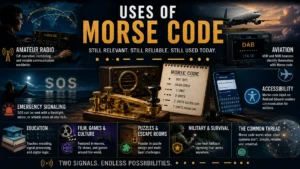
Even today, Morse code is used in:
- Emergency signaling (SOS communication)
- Aviation and navigation training
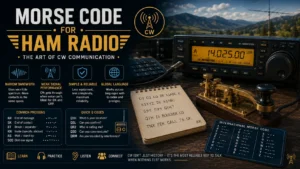
- Amateur radio communication
- Educational coding systems
- Puzzle games and escape rooms
Simple phrases like “Whats Up” help beginners enter real-world Morse usage faster.
Practice “Whats Up” in Morse Code
Try writing it yourself:
WHATS → ·−− ···· ·− − ···
UP    → ··− ·−−·
Now try:
- Writing it without looking
- Saying it with rhythm
- Converting it back to text
Common Mistakes Beginners Make
Avoid these errors when learning Morse code:
- Mixing up dash length (too short or too long)
- Not spacing words correctly (/ separator ignored)
- Memorizing without audio practice
- Learning full sentences before letters
Why Use InMorseCode.com?
Unlike basic translators, our platform is built for learning + interaction, not just conversion.
You get:
✔ Visual + audio learning
✔ Beginner-friendly breakdowns
✔ Real-time conversion tools
✔ Multiple translator formats (text, audio, image)
✔ Practice-based learning system
“Whats Up” in Morse code is a perfect starting point for learning real communication patterns. It’s short, practical, and widely used in casual messaging systems.
Once you master it, you can easily move to longer phrases and full Morse conversations.
👉 Try it here: