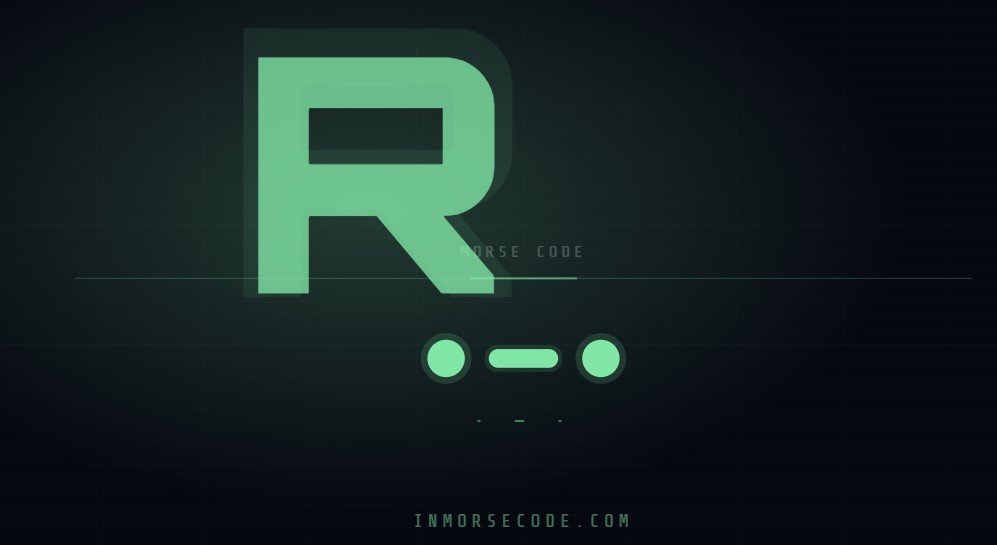
The letter R is an important part of the Morse code alphabet and appears frequently in English words, names, and radio communications. Morse code is a system of communication that represents letters and numbers through combinations of dots and dashes. Developed in the 19th century for telegraph systems, Morse code remains popular among amateur radio operators, emergency communication enthusiasts, and people interested in learning unique communication skills.
Learning R in Morse code helps beginners understand more advanced dot-and-dash combinations while improving timing and rhythm recognition. Because R occurs in many common words, mastering Morse code for R can significantly increase your ability to read and send messages accurately. Whether you’re practicing for fun or studying Morse code seriously, R is a valuable letter to learn.
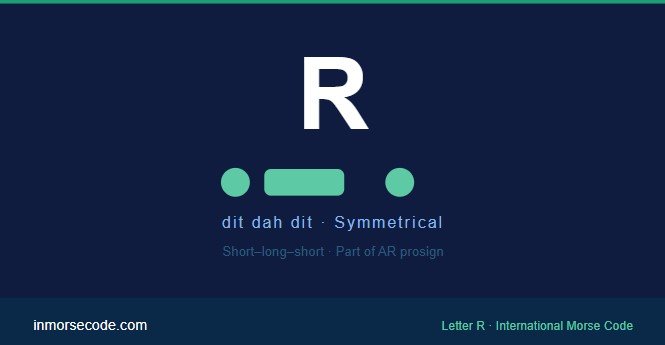
R in Morse code is dot-dash-dot: · − ·. Spoken as “dit dah dit”, it has a pleasant symmetrical rhythm; short, long, short that makes it one of the more memorable characters in the alphabet. R is also the first element of the important ham radio prosign AR (end of message), making it familiar to CW operators from their earliest contacts.
What Is R in Morse Code?
| R · − · |
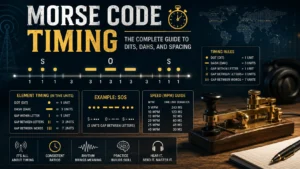
Three elements: dot, dash, dot. At 20 WPM: dot (60 ms) — gap (60 ms) — dash (180 ms) — gap (60 ms) — dot (60 ms). Total duration approximately 420 milliseconds. The symmetrical structure makes R easy to identify: it starts and ends with a short beep, with a longer tone in the middle.
| dit dah dit, the symmetry trick: R is one of four symmetrical Morse characters: it begins and ends with the same element type. This symmetry makes it acoustically distinctive. Once you hear the short-long-short pattern, you will immediately associate it with R. |
R in the AR Prosign
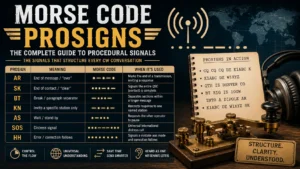
The prosign AR (· − · − ·) is one of the most frequently transmitted sequences in amateur radio CW. It means “end of message” and is sent at the end of a transmission before the other station replies. AR is transmitted without a letter gap; R and A run together as a single 5-element character:
| Letter/Item | Morse Code | Sound / Note |
| A | · − | dit dah |
| R | · − · | dit dah dit |
| AR (prosign) | · − · − · | dit dah dit dah dit — sent without gap |
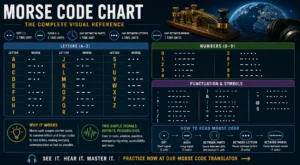
Morse Code Chart
| Item | Value |
|---|---|
| Letter | R |
| Morse Code Symbol | .-. |
| Dot-Dash Display | · − · |
| Length | 3 Signals |
| Difficulty | Medium |
Common Words Starting With R in Morse Code
| Letter/Item | Morse Code | Sound / Note |
| RIG | ·−· ·· −−· | R + I + G (ham radio for your radio setup) |
| RST | ·−· ··· − | R + S + T (signal report) |
| ROGER | ·−· −−− −−· · ·−· | R + O + G + E + R |
| RADIO | ·−· ·− −·· ·· −−− | R + A + D + I + O |
| READ | ·−· · ·− −·· | R + E + A + D |
Common Names Starting With R in Morse Code
- Ruby: · − · / · · − / − · · · / − · − − → R U B Y
- Ryan: · − · / − · − − / · − / − · → R Y A N
- Rose: · − · / − − − / · · · / · → R O S E
- Rachel: · − · / · − / − · · · / · → R A C H E L
Memory Trick
A useful memory trick for R is:
“Run and Return”
Imagine taking a quick step forward (dot), making a longer run (dash), and then quickly returning (dot).
Pattern:
Quick → Long → Quick
This visual movement matches the Morse code sequence for R and makes it easier to remember.
Real World Uses
The letter R is extremely common in English communication and appears in countless words and phrases.
Examples include:
- Radio
- Rescue
- River
- Report
- Route
In amateur radio communication, R is particularly important because it is frequently used in call signs, signal reports, and operating procedures. Emergency communication exercises also often include R due to its appearance in words like “rescue” and “response.”
Because of its frequent use, recognizing R quickly can improve your overall Morse code speed and accuracy.
Words Using R
Words Starting With R
- Radio
- River
- Rescue
- Route
- Report
Words Containing R
- Morse
- Training
- Communication
- Emergency
- Operator
Practicing these words helps reinforce recognition of R in both the beginning and middle of messages.
Practice R in Morse Code
Try sending the letter R five times:
.-.
.-.
.-.
.-.
.-.
Next, practice these simple words:
- RED
- RADIO
- RIVER
- REPORT
- RESCUE
Listen carefully to the rhythm:
dit-dah-dit
Repeat it several times until you can identify it instantly without looking at the pattern.
Quick Facts
- Position in alphabet: 18th
- Morse code pattern: .-.
- Signal count: 3
- Learning difficulty: Medium
- Commonly used: Very often
- Beginner friendly: Yes
Related Morse Code Letters
After learning R, consider studying these related letters:
A (.-)
The first two signals of R match the pattern for A.
Continue Learning Morse Code
Want to practice beyond a single letter?
Visit the Morse Code Translator
Explore more lessons in the learning hub
Try the Morse Code Translator tool to practice converting letters, words, and complete messages.
Frequently Asked Questions: R in Morse Code
What is R in Morse code?
R in Morse code is · − · — dot dash dot. Spoken as “dit dah dit”.
What is AR in Morse code?
AR (· − · − ·) is the end-of-message prosign used in amateur radio CW. It is sent as A+R joined without a letter gap. It signals to the receiving station that the message is complete and a reply is invited.
How do I remember R in Morse code?
Think: “dit dah dit” = short-long-short = a quick “sandwich” of dots around a dash. The symmetry is its defining feature. Some operators use the mnemonic “run” R starts a quick 3-beat pattern that flows forward naturally.
Conclusion
Learning R in Morse code is an excellent step toward mastering more advanced Morse code patterns. Its distinctive dot-dash-dot sequence is common in everyday communication and frequently appears in radio operations and practical messaging. By practicing R regularly, listening to its rhythm, and using it in real words, you can strengthen both your sending and receiving abilities.
Continue learning additional letters, practice consistently, and use the Morse Code Translator tool to improve your confidence and fluency in Morse code communication.