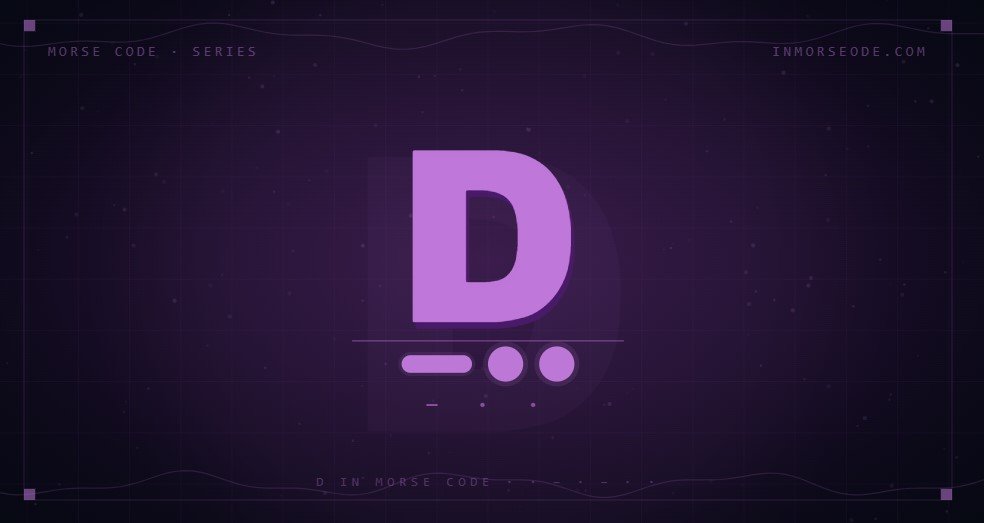
Morse code uses two simple building blocks, a short signal and a long one, to represent every letter of the alphabet. These signals can be sent by tapping, beeping, flashing a light, or even blinking. Once you understand how the system works, learning each letter individually becomes quite straightforward. The letter D is a great one to learn because it shares a family resemblance with other letters, making it easier to fit into your growing knowledge of Morse code. D is also a common consonant in English, appearing in a huge range of words.
Morse Code for the Letter D
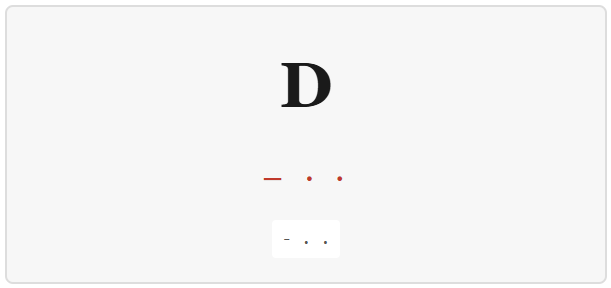
| Letter | Morse Code | Visual (dots and dashes) | Pattern |
|---|---|---|---|
| D | - . . | − · · | dash-dot-dot |
How it sounds
The letter D is pronounced “DEE” /diː/ in English. In Morse code, you send it as – . .. In audio terms, the pattern sounds like “dah-dit-dit”. Beginners should start by tapping the pattern on a desk or table before moving to a Morse key or practice app. Consistent rhythm matters more than speed when you are just starting out.
Memory Trick for D in Morse Code
D is dash-dot-dot. The dash comes first, strong and clear, followed by two lighter dots. Think of the letter D as “Down-it-it”: one big movement to start, then two small ones. You can also remember it as the reverse of U (dot-dot-dash): U builds up to a dash, D starts with one. Noticing these mirror-image relationships in Morse code helps you learn pairs of letters at once.
Real-Life Usage of D
D appears in many of the most common words in English: “do,” “did,” “done,” “down,” and “day” are just a few. In Morse code operating, D is also significant because the NATO phonetic word for it is “Delta.” Delta is widely used in aviation, and any frequent flyer will have heard it in airline names and airport terminology. Radio operators also use D in common abbreviations and messages.
Example Words Using the Letter D
Here are some common words that start with or contain the letter D:
- Delta
- Done
- Down
- Day
- Door
- Deep
- Data
- Drift
- Drive
- Direct
Practising Morse code using real words is much more effective than repeating single letters. Try spelling two or three of these words using what you know so far.
Practice: Sending D in Morse Code
Tap long-short-short to send D: “dah-dit-dit.” Then try pairing D with its reverse, U (dot-dot-dash): dash-dot-dot, then dot-dot-dash. They are exact mirrors of each other and practising them together reinforces both codes simultaneously. Once you are comfortable, try spelling the word “DEAD” in Morse code using the letters you have already learned.
You can also use the Morse Code Translator on this site to hear how D sounds at different speeds. Listening to the correct rhythm is just as important as tapping it yourself.
Ready to practise D and other letters together?
Try the Free Morse Code Translator Tool ›
Browse all Morse Code learning guides ›
Related Letters to Learn Next
Once you are comfortable with D in Morse code, these letters are good next steps because of their related patterns:
Conclusion
The letter D in Morse code is – . ., represented visually as − · ·. Whether you are a complete beginner or brushing up on forgotten knowledge, learning one letter at a time is the most reliable way to build a solid Morse code foundation. D is a letter you will encounter often as your practice progresses, and knowing it well will serve you across words, names, and real transmissions.
Keep practising a little every day. Even five minutes of tapping rhythms or listening to Morse audio will build your skills faster than you expect. Use the Morse Code Translator to test yourself, explore the full learning guide, and keep going through the rest of the alphabet one letter at a time.