Learn how to say “Fire” in Morse Code with accurate translation, audio signals, and step-by-step breakdown. This emergency code is one of the most important safety signals used in communication history.
Whether you are learning Morse code for survival training, radio communication, or personal interest, this guide helps you master it quickly.
🔥 What is “Fire” in Morse Code?
The word “Fire” in Morse code is:
··−· ·· ·−· ·
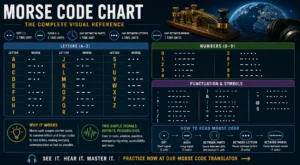
This breaks down into four letters:
- F → ··−·
- I → ··
- R → ·−·
- E → ·
⚡ Why “Fire” Matters in Morse Code
Unlike casual greetings, “Fire” is part of emergency communication vocabulary. It is commonly used in:
- Emergency signaling systems
- Military communication training
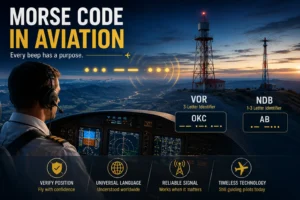
- Aviation and marine distress learning
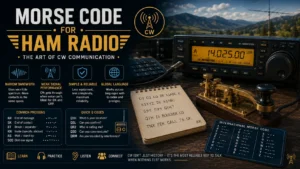
- Radio operator education
- Survival and rescue drills
Learning it correctly can improve your understanding of real-world emergency Morse code usage.
🔍 Letter-by-Letter Breakdown
F
··−· → di-di-dah-dit
I
·· → dit-dit
R
·−· → di-dah-dit
E
· → dit
Each letter is transmitted using short (·) and long (−) signals, forming a structured rhythm.
🔊 Audio Learning (Recommended)
Morse code is not just visual—it is designed for sound recognition.
- Dot (·) = short beep
- Dash (−) = long beep
When played together, “Fire” becomes a recognizable emergency rhythm pattern that operators can quickly identify even in low-visibility conditions.
🧠 How to Learn “Fire” in Morse Code Faster
Follow this simple method:
- Learn each letter separately (F, I, R, E)
- Practice rhythm instead of memorizing symbols
- Repeat using audio playback
- Write it without looking at the chart
- Test yourself using an interactive converter
👉 Practice instantly using the tools at InMorseCode learning platform
🚨 Fire in Emergency Communication Context
In real emergency systems, Morse code is often paired with other distress signals like:
- SOS (··· −−− ···)
- MAYDAY (radio voice distress call)
- HELP signals in encoded form
While “Fire” itself is not a universal distress code like SOS, it is still widely used in training simulations and safety communication systems.
🧪 Practice “Fire” in Morse Code
Try writing it yourself:
F → ··−·
I → ··
R → ·−·
E → ·
Now combine:
··−· ·· ·−· ·
⚠️ Common Beginner Mistakes
Avoid these errors when learning emergency Morse words:
- Mixing letter spacing (very important in emergencies)
- Confusing F (··−·) with U (··−)
- Ignoring audio practice
- Learning full words before mastering alphabet
🌍 “Fire” in Other Languages (Morse Learning Extension)
Understanding translations helps with global emergency learning:
- Fire → Fuego (Spanish)
- Fire → Feu (French)
- Fire → Feuer (German)
- Fire → आग (Hindi)
- Fire → 火事 (Japanese)
This helps you connect Morse code with multilingual emergency systems.
📡 Why Learn Morse Code Emergency Words?
Learning words like Fire, Help, Danger, SOS helps you:
- Understand survival communication systems
- Improve radio operator skills
- Build emergency awareness
- Train memory and signal recognition
- Learn structured communication logic
🚀 Learn More Emergency Morse Codes
Expand your knowledge with essential survival phrases:
👉 Explore full emergency Morse library at InMorseCode learning platform
🧭 Final Thoughts
“Fire” in Morse code is more than just a word—it is part of a structured emergency communication system used in training and real-world signal education.
Mastering it builds a strong foundation for advanced Morse code learning and survival communication skills.