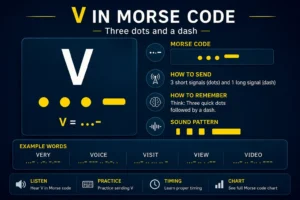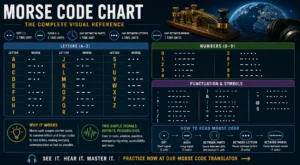
S in Morse code is three dots: · · ·. Spoken as “dit dit dit”, it is one of the most recognizable characters in the entire system not just because it contains the satisfying three-beat pattern, but because it forms the first half of SOS, the world’s most famous distress signal.
SOS in Morse code — · · · − − − · · · — is so well-known precisely because S (three dots) and O (three dashes) create an unmistakable alternating pattern that stands out against any transmission background. Understanding S is therefore both a beginner learning milestone and a potentially life-saving piece of knowledge.
What Is S in Morse Code?
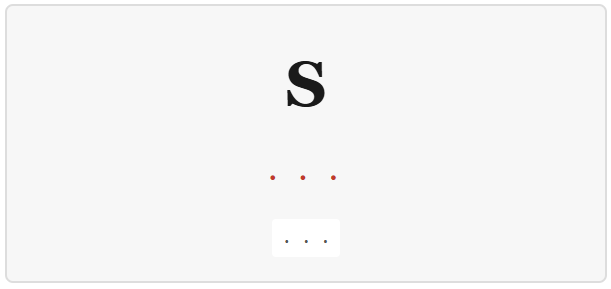
| Letter | Morse Code | Visual (dots and dashes) | Pattern |
|---|---|---|---|
| S | . . . | · · · | three dots |
How it sounds
The letter S is pronounced “ESS” /ɛs/ in English. In Morse code, you send it as . . .. In audio terms, the pattern sounds like “dit-dit-dit”. Beginners should start by tapping the pattern on a desk or table before moving to a Morse key or practice app. Consistent rhythm matters more than speed when you are just starting out.
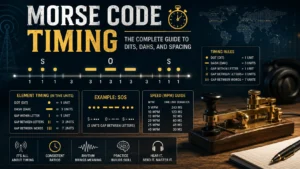
Three dots. Three identical short beeps in succession. At 20 WPM, each dot lasts 60 ms with 60 ms gaps between them. The full character S lasts approximately 300 milliseconds total the same duration as the letter A, but with a completely different rhythmic feel: rapid-fire three taps vs one short and one long.
S, O, and the SOS Signal
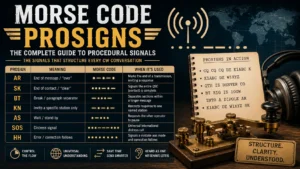
SOS is the internationally recognised distress signal, transmitted as a continuous sequence without character gaps: · · · − − − · · ·. The ITU specifies SOS as a single prosign it is sent with no pause between S, O, and S, making it a nine-element signal that is immediately recognisable and distinct from any normal word transmission.
| Letter | Morse Code | Sound |
| S | · · · | dit dit dit three rapid dots |
| O | − − − | dah dah dah three long dashes |
| S | · · · | dit dit dit three rapid dots |
| SOS complete | · · · − − − · · · | nine elements, no gaps between letters |
| SOS is never sent with letter gaps: Standard Morse uses 3-unit gaps between letters. SOS breaks this rule, it is always sent as one unbroken 9-element sequence. This is what makes SOS instantly distinguishable from the coincidental transmission of the letters S, O, S in normal text. Always transmit SOS as one continuous prosign. |
Common Words Starting With S in Morse Code
| Letter | Morse Code | Sound |
| SOS | ··· −−− ··· | the distress signal |
| SEND | ··· · −· −·· | S E N D |
| STOP | ··· − −−− ·−−· | S T O P |
| SAFE | ··· · − ··−· · | S A F E |
| SIGNAL | ··· ·· −−· −· ·−· · | S I G N A L |
Common Names Starting With S in Morse Code
- Sam: · · · · − − − → S A M
- Sarah: · · · · − · − · · · · · → S A R A H
- Sofia: · · · − − − · · − · · · − · − → S O F I A
- Simon: · · · · · − − − − − − · → S I M O N
- Sophie: · · · − − − · − · · · · − · · · · → S O P H I E
Real-Life Usage of S
S is one of the most used letters in the English language, appearing at the start and end of thousands of words. It forms plural nouns, starts common words, and is used heavily in radio communication. The most famous use of S in Morse code is the SOS distress signal: three dots, three dashes, three dots. It was chosen specifically because S and O are among the easiest codes to send and recognise under pressure.
Example Words Using the Letter S
Here are some common words that start with or contain the letter S:
- Signal
- Send
- Safe
- Save
- Sound
- Start
- Stop
- Ship
- South
- Speed
Practising Morse code using real words is much more effective than repeating single letters. Try spelling two or three of these words using what you know so far.
Practice: Sending S in Morse Code
Tap three short taps on any surface to send S. Then try sending SOS: three short taps, three long taps, three short taps. This is a great first complete exercise because you are learning two letters at once. Repeat SOS ten times and you will have both S and O memorised in no time. You can also try an online Morse code audio player to hear how it sounds.
You can also use the Morse Code Translator on this site to hear how S sounds at different speeds. Listening to the correct rhythm is just as important as tapping it yourself.
Ready to practise S and other letters together?
Try the Free Morse Code Translator Tool ›
Browse all Morse Code learning guides ›
Related Letters to Learn Next
Once you are comfortable with S in Morse code, these letters are good next steps because of their related patterns:
Frequently Asked Questions: S in Morse Code
What is S in Morse code?
S in Morse code is three dots: · · ·. It sounds like “dit dit dit” three rapid, equal-length short beeps.
Is SOS written as S-O-S or as one signal?
SOS is an official Morse prosign, transmitted as a single continuous 9-element sequence with no gaps between letters: · · · − − − · · ·. It is never sent as three separate letters with letter-spacing gaps.
How do I distinguish S from H in Morse code?
S is · · · (3 dots) and H is · · · · (4 dots). The difference is one extra dot. At speed, count carefully: three rapid dots = S, four = H. With practice, the longer four-dot sound of H becomes instinctively distinguishable from the shorter three-dot S.
Conclusion
The letter S in Morse code is . . ., represented visually as · · ·. Whether you are a complete beginner or brushing up on forgotten knowledge, learning one letter at a time is the most reliable way to build a solid Morse code foundation. S is a letter you will encounter often as your practice progresses, and knowing it well will serve you across words, names, and real transmissions.
Keep practising a little every day. Even five minutes of tapping rhythms or listening to Morse audio will build your skills faster than you expect. Use the Morse Code Translator to test yourself, explore the full learning guide, and keep going through the rest of the alphabet one letter at a time.