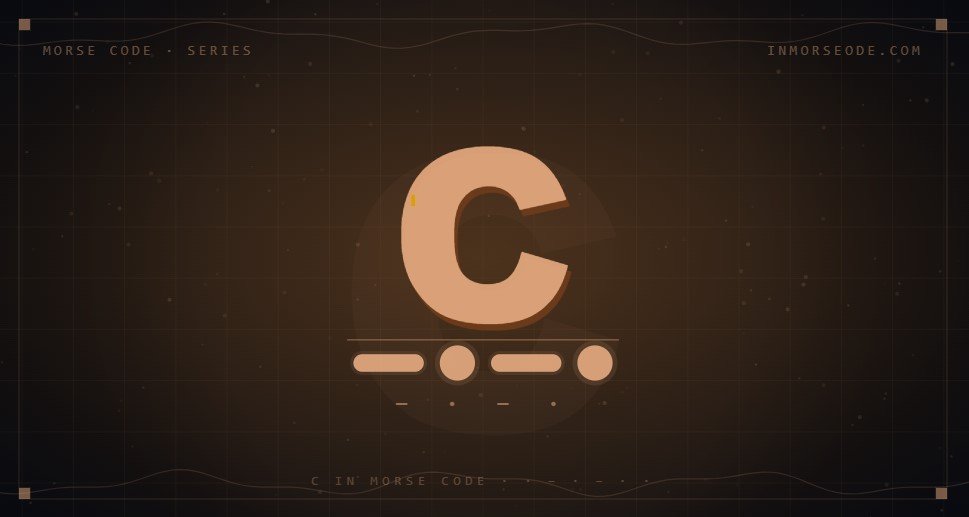
Morse code is one of the most enduring communication systems ever invented. Its combination of short and long signals can carry information through sound, light, or even tapped on a surface in complete silence. The letter C has one of the most recognisable rhythms in the entire Morse code alphabet. It alternates between dashes and dots in a bouncy, even pattern that is hard to miss once you have heard it. C is also a very common letter in English, appearing in words across every topic and context.
Morse Code for the Letter C
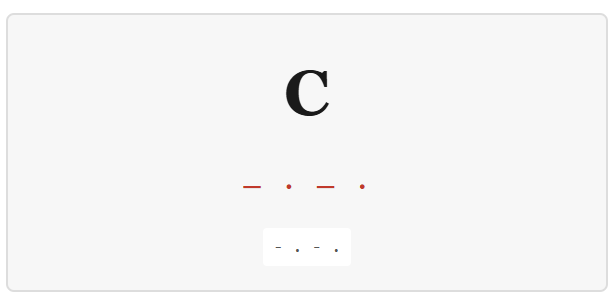
| Letter | Morse Code | Visual (dots and dashes) | Pattern |
|---|---|---|---|
| C | - . - . | − · − · | dash-dot-dash-dot |
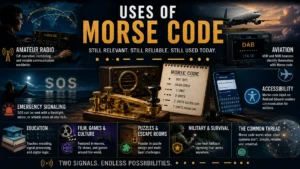
The letter C is an important part of the Morse code alphabet and appears in many common English words, names, and communication terms. Morse code is a system that uses combinations of dots and dashes to represent letters, numbers, and symbols. Originally developed for telegraph communication, it is still widely studied and used in amateur radio, emergency signaling, and educational training.
Learning C in Morse code helps beginners become comfortable with longer signal patterns and improves their ability to recognize different combinations of dots and dashes. Since the letter C is frequently found in words related to communication, technology, and everyday conversation, mastering Morse code for C can significantly improve your Morse code skills. Understanding how to send and recognize C is an important step toward learning the complete Morse code alphabet.
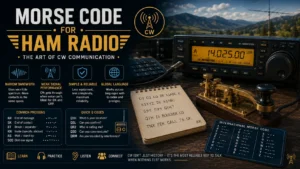
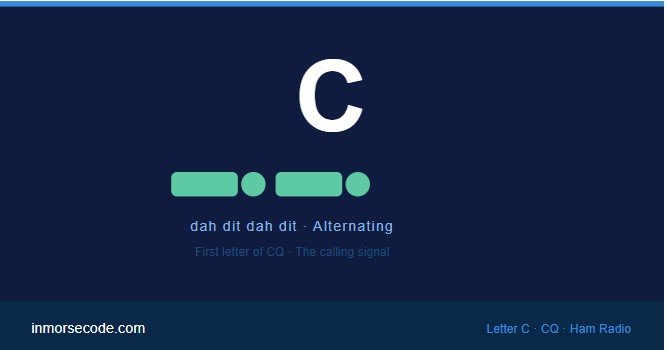
C in Morse code is − · − ·. Spoken as “dah dit dah dit”, it has a perfectly alternating dash-dot-dash-dot rhythm that makes it both easy to recognise and easy to transmit. C is most famous in the Morse world as the first letter of CQ — the universal calling sequence used by every ham radio operator in the world to invite any station to reply.
What Is C in Morse Code?
| C − · − · |
Four elements: dash, dot, dash, dot — perfectly alternating. At 20 WPM total duration approximately 600 milliseconds. The regular alternation makes C acoustically distinctive — it has the characteristic “dah-dit-dah-dit” rhythm that experienced operators find one of the easier 4-element characters to identify reliably.
Morse Code Chart
| Item | Value |
|---|---|
| Letter | C |
| Morse Code Symbol | -.-. |
| Dot-Dash Display | − · − · |
| Length | 4 Signals |
| Difficulty | Medium |
C in the CQ Calling Sequence
CQ is the most transmitted 2-letter sequence in all of amateur radio. It means “calling any station” — a general call inviting any ham in range to reply. Every CW contact starts with it:
| Letter/Item | Morse Code | Sound / Note |
| C | − · − · | dah dit dah dit |
| Q | − − · − | dah dah dit dah |
| CQ | − · − · / − − · − | the universal ham radio call |
| CQ DE | …followed by your callsign | the complete calling sequence |
| What CQ sounds like: At 20 WPM, CQ is approximately 1.2 seconds long. Experienced operators recognise the dah-dit-dah-dit / dah-dah-dit-dah rhythm of CQ before their conscious mind has processed it — the pattern is that fundamental to CW radio culture. |
Common Words Starting With C in Morse Code
| Letter/Item | Morse Code | Sound / Note |
| CQ | −·−· −−·− | the ham radio calling sequence |
| CALL | −·−· ·− ·−·· ·−·· | C + A + L + L |
| CODE | −·−· −−− −·· · | C + O + D + E |
| COPY | −·−· −−− ·−·· −·−− | C + O + P + Y |
| CLEAR | −·−· ·−·· · ·−· −·−− | C + L + E + A + R |
Common Names Starting With C in Morse Code
- Charlotte: − · − · / · · · · / · − / · − · · / · − · · / − / · → C H A R L O T T E
- Charlie: − · − · / · · · · / · − / · − · · / · · / · → C H A R L I E
- Chloe: − · − · / · · · · / · − · · / − − − / · → C H L O E
- Carlos: − · − · / · − / · − · / · − · · / − − − / · · · → C A R L O S
What Is the Morse Code for C?
The Morse code for C is:
-.-.
Visual form:
− · − ·
This pattern begins with a dash, followed by a dot, another dash, and a final dot. The alternating sequence creates a distinctive rhythm that stands out from many other Morse code letters.
When transmitting C in Morse code, the rhythm sounds like:
dah-dit-dah-dit
The alternating long and short signals make C an excellent letter for practicing Morse code timing and accuracy.
If you are learning how to write C in Morse code, focus on maintaining a clear difference between the dashes and dots while keeping a steady rhythm throughout the sequence.
Memory Trick
A useful memory trick for C is:
“Climb and Continue”
Imagine climbing a hill (dash), taking a short step (dot), climbing another hill (dash), and taking another short step (dot).
Pattern:
Long → Short → Long → Short
This alternating movement mirrors the Morse code pattern for C and makes it easier to remember.
Real World Uses
The letter C appears frequently in everyday communication and is found in many common words.
Examples include:
- Code
- Communication
- Computer
- Connect
- City
In amateur radio and Morse code training, C is often used in practice sessions because its alternating pattern helps students improve listening skills. It is also commonly found in technical vocabulary and communication-related terminology.
Because C appears in so many everyday words, learning to recognize it quickly can improve your overall Morse code reading speed.
Words Using C
Words Starting With C
- Code
- Computer
- Communication
- Connect
- City
Words Containing C
- Practice
- Message
- Radio Communication
- Signal
- Electric
These examples help learners identify C in different positions within words and messages.
Practice C in Morse Code
Try sending the letter C five times:
-.-.
-.-.
-.-.
-.-.
-.-.
Now practice with these simple words:
- CODE
- CITY
- CALL
- CONNECT
- COMPUTER
Listen carefully to the rhythm:
dah-dit-dah-dit
Repeat it several times until you can instantly associate the sound with the letter C.
For extra practice, compare C with K (-.-) and R (.-.) to learn how similar patterns differ.
Quick Facts
- Position in alphabet: 3rd
- Morse code pattern: -.-.
- Signal count: 4
- Learning difficulty: Medium
- Commonly used: Yes
- Beginner friendly: Moderate
Related Morse Code Letters
After learning C, consider studying these related letters:
K (-.-)
A shorter version of the C pattern with one fewer dot.
R (.-.)
Another alternating dot-and-dash pattern that improves recognition skills.
Learning these letters together strengthens your understanding of Morse code rhythm and structure.
Continue Learning Morse Code
Want to practice beyond a single letter?
Visit the Morse Code Translator
Explore more lessons in the learning hub
Try the Morse Code Translator tool to practice converting letters, words, and complete messages.
Frequently Asked Questions: C in Morse Code
What is C in Morse code?
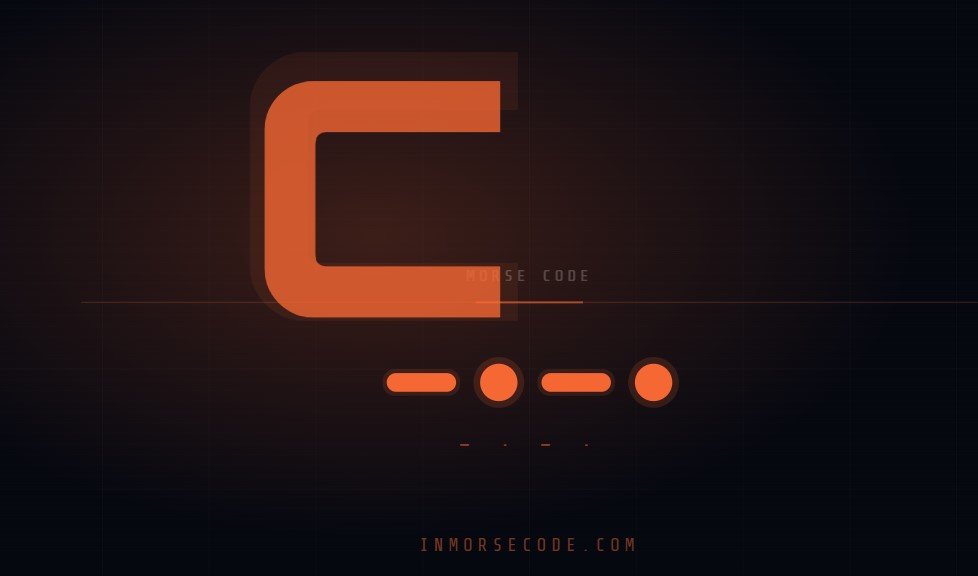
C in Morse code is − · − · — dash dot dash dot. Spoken as “dah dit dah dit”.
Why is C called the CQ letter?
C is the first letter of CQ — the universal ham radio calling sequence. Because every CW operator transmits CQ thousands of times during their operating career, C (− · − ·) and Q (− − · −) are two of the first characters learned in ham radio Morse training.
How do I remember C in Morse code?
The alternating pattern “dah dit dah dit” is the simplest structure to remember: it just alternates. Unlike characters with runs of the same element, C never repeats a type. Some operators say “CW CW” — two syllables matching the two dash-dot pairs.
Conclusion
Learning C in Morse code is an important step toward mastering more advanced Morse code patterns. Its alternating dash-dot-dash-dot sequence improves timing, listening, and recognition skills while helping learners become comfortable with longer signal combinations. Because C appears frequently in communication-related words and everyday language, understanding it can greatly improve your Morse code proficiency.
Practice regularly, listen carefully to the rhythm, and use the Morse Code Translator tool to reinforce your learning. With consistent effort, you’ll become more confident in sending and receiving Morse code messages.