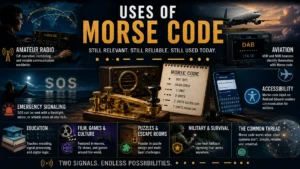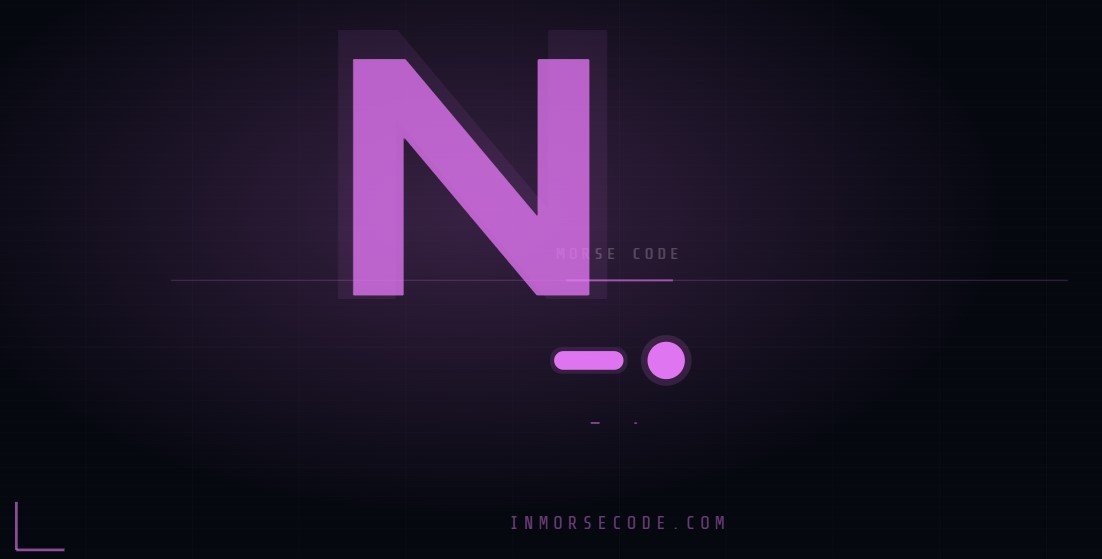
The letter N is one of the most commonly used letters in the English language, making it an important character to learn when studying Morse code. Morse code is a communication system that uses combinations of dots and dashes to represent letters, numbers, and symbols. Originally developed for telegraph communication, Morse code is still used today in amateur radio, emergency signaling, aviation training, and educational activities.
Learning N in Morse code helps beginners recognize mixed dot-and-dash patterns while building a stronger understanding of Morse code timing. Since N appears in countless everyday words, names, and messages, mastering Morse code for N can significantly improve your ability to send and receive Morse code efficiently. Whether you are learning for fun or practical communication, this letter is an essential part of the Morse code alphabet.
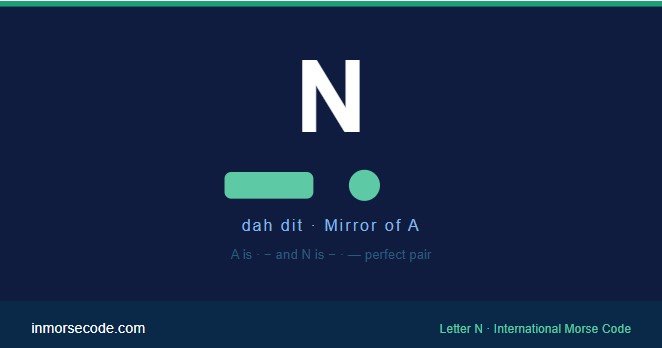
N in Morse code is a dash followed by a dot: − ·. Spoken as “dah dit”, it is the exact mirror image of A (· −). This relationship; A is dot-dash, N is dash-dot; makes them one of the most useful learning pairs in the entire alphabet. Master both together and you have encoded the two most fundamental 2-element patterns in Morse code.
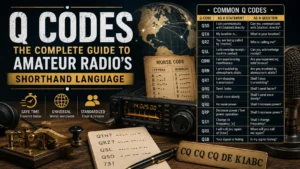
N is the sixth most common letter in English, appearing constantly in words like AND, NOT, IN, ONE, ANY, and in hundreds of everyday names. In ham radio, N appears in US callsign prefixes (N5ABC) and in the Q-code abbreviation TNX (thanks).
What Is N in Morse Code?
| N − · |
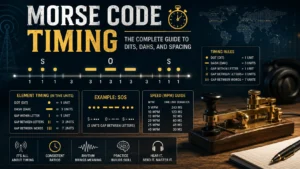
One dash followed by one dot. At 20 WPM: dash = 180 ms, gap = 60 ms, dot = 60 ms. Total character duration approximately 300 milliseconds.
N and A: The Perfect Mirror Pair
| Letter/Item | Morse Code | Sound / Note |
| A | · − | dit dah — dot then dash |
| N | − · | dah dit — dash then dot |
| Learning A and N together: Because A (· −) and N (− ·) are identical in element count but reversed in order, learning them as a pair reinforces both immediately. Every time you drill A, drill N. Every time you hear dot-dash, confirm it is not dash-dot. This contrast is the foundation of 2-element Morse recognition. |
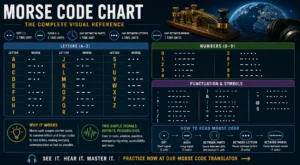
Morse Code Chart
| Item | Value |
|---|---|
| Letter | N |
| Morse Code Symbol | -. |
| Dot-Dash Display | − · |
| Length | 2 Signals |
| Difficulty | Easy |
What Is the Morse Code for N?
The Morse code for N is:
-.
Visual form:
− ·
The pattern begins with a dash followed by a dot. This sequence is the reverse of the Morse code for A, which is dot-dash (.−). Understanding this relationship can help learners remember both letters more easily.
When sending N in Morse code, hold the first signal longer for the dash and then follow it with a short dot. The rhythm sounds like:
dah-dit
Because it contains only two signals, N is considered a beginner-friendly letter and is often introduced early in Morse code training.
Memory Trick
A simple way to remember N in Morse code is:
“No” starts strong and ends quickly.
Think of saying “No!” with emphasis at the beginning. The strong start represents the dash, while the quick ending represents the dot.
Another memory trick is:
N = Long then short
Dash first, dot second.
Real World Uses
The letter N appears frequently in English words, making it valuable for Morse code communication. Recognizing it quickly can improve your overall decoding speed.
Common uses include:
- Personal names
- Navigation terms
- Radio communication
- Emergency messages
- Educational practice
In amateur radio, operators often use N when exchanging call signs and location information. It is also commonly heard during Morse code training sessions because of its simple and memorable pattern.
Words Using N
Words Starting With N
- Name
- Nature
- Night
- Network
- Number
Words Containing N
- Signal
- Communication
- Planet
- Training
- Mountain
These examples help learners identify N in different positions within words and messages.
Practice N in Morse Code
Try sending the letter N five times:
-.
-.
-.
-.
-.
Now practice with these simple words:
- NO
- NET
- NAME
- NORTH
- NATION
Listen carefully to the rhythm and focus on making the dash clearly longer than the dot.
For listening practice, repeat:
dah-dit
Once you can recognize the sound instantly, try mixing N with other letters you have already learned.
N in Ham Radio: Callsigns and CQ
In amateur radio, the letter N has special significance:
- US amateur callsigns beginning with N (N5XYZ) indicate a Technician or General class licensee
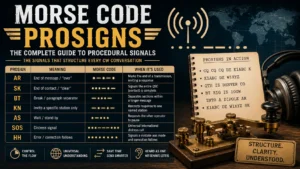
- The prosign KN (−·− −·) means “go only, specific station”, no stations other than the addressed one should reply
- TNX (thanks) and NR (number) are among the most common CW abbreviations containing N
Common Words Starting With N in Morse Code
| Letter/Item | Morse Code | Sound / Note |
| NO | −· −−− | N + O |
| NOT | −· −−− − | N + O + T |
| NOW | −· −−− · − − | N + O + W |
| NAME | −· ·− −− · | N + A + M + E |
| NEED | −· · ·−·· −·· | N + E + E + D |
Common Names Starting With N in Morse Code
- Noah: − · / − − − / · − / · · · · → N O A H
- Nora: − · / − − − / · − · / · − → N O R A
- Nathan: − · / · − / − / · · · · / · − / − · → N A T H A N
- Nina: − · / · · / − · / · − → N I N A
Frequently Asked Questions: N in Morse Code
What is N in Morse code?
N in Morse code is − · — a dash followed by a dot. Spoken as “dah dit”.
How is N different from A?
A is · − (dot then dash) and N is − · (dash then dot). They contain the same two elements in reversed order. This makes them easy to confuse by beginners, always pay attention to whether the long element comes first (N) or second (A).
What is the KN prosign in Morse code?
KN (−·− −·) is a Morse prosign meaning “go ahead, specific station only”. It is sent at the end of a CQ or transmission to indicate that only a previously identified station should reply.
Quick Facts
- Position in alphabet: 14th
- Morse code pattern: -.
- Signal count: 2
- Learning difficulty: Easy
- Commonly used: Yes
- Beginner friendly: High
Related Morse Code Letters
After learning N, consider studying these related letters:
A (.-)
A uses the reverse pattern of N and is easy to compare.
T (-)
A single dash that helps reinforce the first part of N.
D (-..)
Expands on the N pattern by adding two additional dots.
Learning these letters together improves Morse code recognition and timing skills.
Continue Learning Morse Code
Want to practice beyond a single letter?
Visit the Morse Code Translator
Explore more lessons in the learning hub
Try the Morse Code Translator tool to practice converting letters, words, and complete messages.
Conclusion
Learning N in Morse code is an important step toward mastering the Morse code alphabet. Its simple dash-dot pattern is easy to remember and appears frequently in everyday communication. By practicing N regularly, listening to its rhythm, and using it in common words, you can improve both your sending and receiving accuracy.
Keep building your Morse code skills one letter at a time, and use the Morse Code Translator tool to reinforce what you learn through daily practice.